
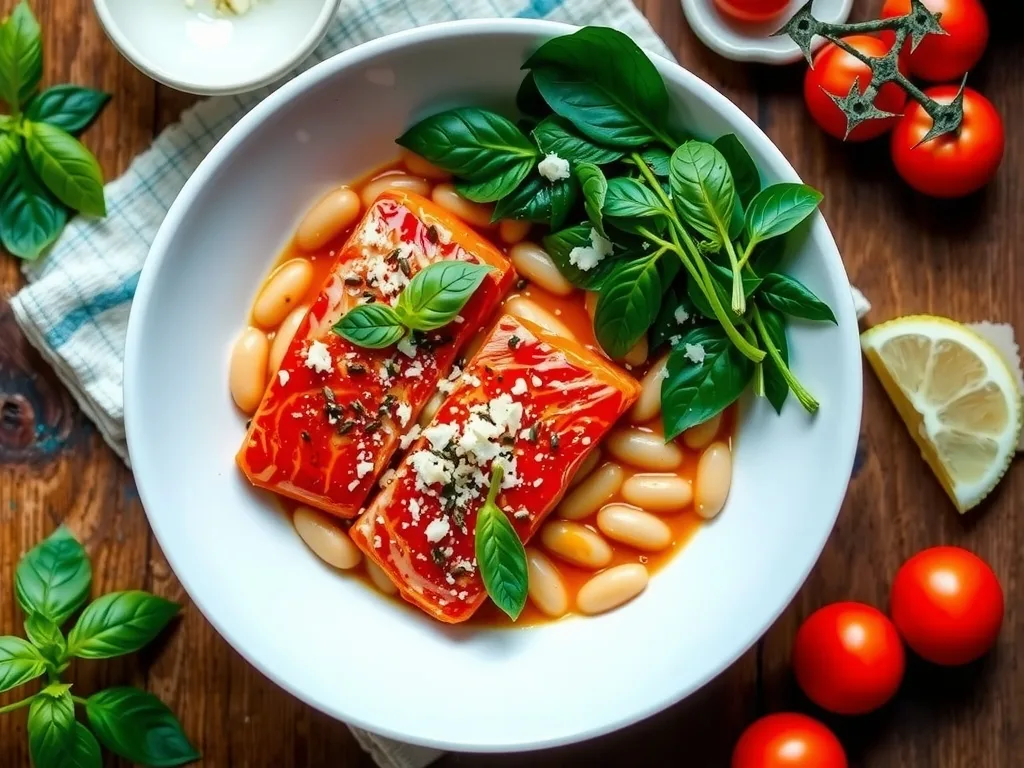
Creamy Tomato Beans with Flaky Salmon – A Hearty, One‑Pan Dinner for Comfort Lovers
There’s something undeniably satisfying about a dish that brings together the briny sweetness of salmon, the earthy creaminess of white beans, and the bright acidity of tomatoes—all wrapped in a velvety sauce that clings to every bite. This Creamy Tomato Beans with Flaky Salmon recipe is designed for those cozy evenings when you crave a nourishing meal that feels indulgent yet comes together in under an hour. The flavors meld slowly in the pan, allowing the salmon to stay tender and flaky while the beans soak up the herb‑infused tomato broth, creating a harmony that’s both rustic and refined.
Ideal for home cooks in the 40‑65+ age bracket who appreciate straightforward techniques without sacrificing depth, this one‑pan wonder minimizes cleanup while maximizing taste. The smoky paprika and a hint of chili give the sauce a gentle warmth, while a swirl of double cream (or crème fraîche) adds luxurious silkiness. Finish with fresh basil, a grating of Parmesan, and a squeeze of lemon, and you have a plate that feels like a restaurant‑worthy entrée but is born from pantry staples and a couple of fresh fillets.
Whether you’re feeding a family, entertaining friends, or simply treating yourself after a long day, this dish adapts beautifully. Serve it over crusty bread, alongside a simple green salad, or even spooned over creamy polenta for extra comfort. Let’s dive into the variations, ingredients, and step‑by‑step process that will turn your kitchen into a haven of aromatic, creamy goodness. ## Alternate Names & Variations
This comforting plate wears many names depending on regional twists and personal preferences. You might see it called White Bean Stew with Salmon, Tuscan Salmon with Cannellini Beans, or Pan‑Seared Salmon with White Beans in various food blogs and cookbooks. Each variation highlights the same core components—creamy beans, tomato‑based sauce, and flaky salmon—but swaps in different herbs, spices, or extra vegetables to suit local palates.
For a Mediterranean spin, add a handful of Kalamata olives and a teaspoon of dried oregano, then finish with a drizzle of extra‑virgin olive oil instead of cream. If you prefer a lighter version, substitute the double cream with Greek yogurt stirred in at the end of cooking, which adds tang without the heaviness. For a heartier twist, toss in diced sweet potatoes or chopped kale alongside the beans; they’ll absorb the sauce and add extra fiber and texture. Feel free to experiment with the beans themselves—cannellini, great northern, or even butter beans work beautifully, while the salmon can be swapped for trout or a firm white fish like cod if you desire a milder flavor.
Ingredients
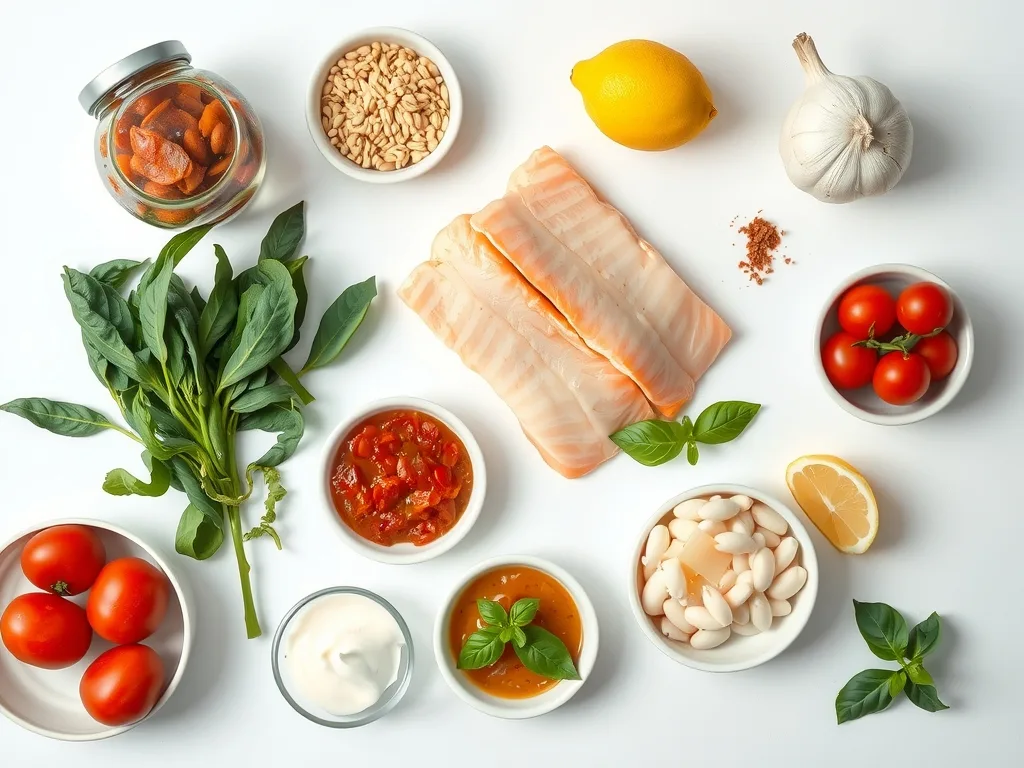
– 1 jar Queen White Beans (approximately 400 g) with their bean stock
– 2 salmon fillets (about 180 g each), skin‑on for crispness
– 4 tbsp olive oil, divided – 2 echalion shallots, finely chopped
– 3 garlic cloves, finely grated
– 300 g cherry tomatoes, halved
– 2 tbsp tomato puree
– 1 tbsp smoked paprika (preferably the sweet variety)
– ½ tsp chili flakes or chili powder (adjust to heat preference)
– 150 ml double cream or 2 tbsp crème fraîche
– 75 g fresh spinach (optional, for added greens)
– 45 g Parmesan cheese, grated, plus extra for serving
– Fresh basil leaves, torn, for garnish
– Lemon wedges, for serving
– Salt and freshly ground black pepper, to taste
*Note: The script will insert an image directly after this section.*
Step-by-Step Instructions
1. Prep the beans – Open the jar of Queen White Beans and reserve both the beans and their liquid. Give the beans a quick rinse under cold water if the stock is overly salty, then set aside.
2. Season the salmon – Pat the salmon fillets dry with paper towels. Lightly season both sides with salt and pepper.
3. Sear the salmon – Heat 2 tbsp of olive oil in a large, deep skillet over medium‑high heat. When the oil shimmers, place the salmon skin‑side down. Cook undisturbed for 4‑5 minutes, until the skin is golden and crisp. Flip and cook another 2‑3 minutes for medium‑doneness, then transfer the fillets to a plate and cover loosely with foil to keep warm.
4. Build the flavor base – Reduce the heat to medium. Add the remaining 2 tbsp olive oil to the same skillet. Toss in the chopped shallots and sauté for 3‑4 minutes until translucent and fragrant. Add the grated garlic and cook for another 30 seconds, stirring constantly to avoid burning.
5. Introduce the tomatoes – Stir in the halved cherry tomatoes and tomato puree. Cook for 5‑6 minutes, allowing the tomatoes to break down and release their juices. 6. Season the sauce – Sprinkle the smoked paprika and chili flakes over the tomato mixture. Stir well and let the spices toast for about 1 minute, which deepens their aroma.
7. Add the beans and liquid – Pour in the reserved bean stock (from the jar) along with the beans themselves. Bring the mixture to a gentle simmer, then reduce heat to low.
8. Create the creaminess – Stir in the double cream (or crème fraîche) and let the sauce simmer for 3‑4 minutes, thickening slightly. If you prefer a thinner consistency, add a splash of water or extra bean stock. 9. Incorporate greens (optional) – If using spinach, add it now and stir until wilted, about 1 minute.
10. Finish with cheese – Stir in the grated Parmesan, allowing it to melt into the sauce. Taste and adjust seasoning with salt and pepper as needed.
11. Reunite salmon and sauce – Nestle the seared salmon fillets back into the skillet, skin‑side up, to warm through for 2‑3 minutes. This step lets the salmon absorb some of the sauce while retaining its flaky texture.
12. Plate and garnish – Spoon the creamy tomato beans onto warm plates, top each with a salmon fillet, and garnish with torn basil leaves, an extra sprinkle of Parmesan, and a lemon wedge on the side.
13. Serve immediately – Enjoy while the sauce is luxuriously warm and the salmon is perfectly flaky.
*Chef’s Tips:*
– For extra crisp skin, start the salmon in a cold pan, then turn the heat to medium‑high; the gradual temperature rise renders fat evenly.
– If you prefer a smokier note, add a pinch of chipotle powder alongside the sweet smoked paprika.
– Substitute the double cream with half‑and‑half and a teaspoon of Dijon mustard for a tangier silkiness.
Recipe Card Reference
Prep Time: 10 minutes
Cook Time: 25 minutes
Total Time: 35 minutes
Servings: 2 generous portions (easily doubled)
Calories per Serving: Approximately 520 kcal (based on double cream; using crème fraîche reduces to ~480 kcal)
This breakdown assumes the use of two 180 g salmon fillets, one jar of beans, and the full amount of cream listed. Adjustments to portion size or ingredient swaps will shift the calorie count modestly, but the dish remains a balanced source of protein, healthy fats, and fiber.
Why This Recipe Works & Expert Tips
The magic of this dish lies in the layered flavor development that occurs when each component is given its moment to shine. First, searing the salmon creates a Maillard‑reacted crust that locks in moisture and adds a subtle umami depth. Removing the fish early prevents overcooking, ensuring the flesh stays tender and flaky when it returns to the sauce.
Next, the soffritto of shallots and garlic builds a sweet aromatic foundation. Cooking them slowly in olive oil releases their sugars without browning, which would impart bitterness. Adding the cherry tomatoes at this stage allows their natural pectin to break down, thickening the sauce while preserving a bright acidity that cuts through the richness of the cream.
The smoked paprika contributes a gentle, wood‑smoked nuance that pairs beautifully with both the beans and the salmon, while the chili flakes provide a background warmth that awakens the palate without overwhelming it. Incorporating the bean stock—rather than plain water—infuses the liquid with the beans’ own earthy essence, reducing the need for excessive seasoning.
Finally, the cream (or crème fraîche) emulsifies with the tomato base, creating a velvety mouthfeel that clings to each bean and salmon flake. The Parmesan adds a salty, nutty finish that enhances the perception of creaminess without adding extra fat. Finishing with fresh basil and lemon introduces a fresh, herbal top note that balances the dish’s richness, making each bite feel light yet satisfying.
*Expert Substitutions:*
– Beans: If Queen White Beans aren’t available, use canned cannellini beans, drained and rinsed, with ½ cup of low‑sodium vegetable broth in place of the bean stock.
– Cream: For a dairy‑free version, stir in ¼ cup of coconut cream blended with 1 tbsp of nutritional yeast; the result is still silky with a hint of tropical sweetness.
– Salmon: Skinless fillets work fine—just reduce the initial sear time to 2‑3 minutes per side to avoid drying out. ## Storage, Freezing, and Reheating
Allow the dish to cool to room temperature before transferring it to an airtight container. Store in the refrigerator for up to three days; the flavors often deepen overnight, making leftovers even more enjoyable.
To freeze, place the cooled bean‑and‑salmon mixture (excluding the fresh basil and lemon garnish) in a freezer‑safe container or heavy‑duty zip‑top bag. Lay flat to freeze, then stack. It will keep well for up to two months. Note that the cream may separate slightly upon thawing; a quick stir while reheating restores its smoothness.
Reheating:
– Stovetop (recommended): Transfer the desired portion to a saucepan over low‑medium heat. Add a splash of water, broth, or extra cream if the sauce looks thick. Warm gently, stirring occasionally, until the salmon is heated through (about 5‑7 minutes).
– Microwave: Place a serving in a microwave‑safe bowl, cover loosely, and heat on 50 % power in 30‑second intervals, stirring between bursts, until hot. Add a drizzle of cream or lemon juice if needed to revive the sauce’s silkiness.
Avoid high‑heat reheating, as it can cause the salmon to become tough and the cream to curdle.
People Also Ask
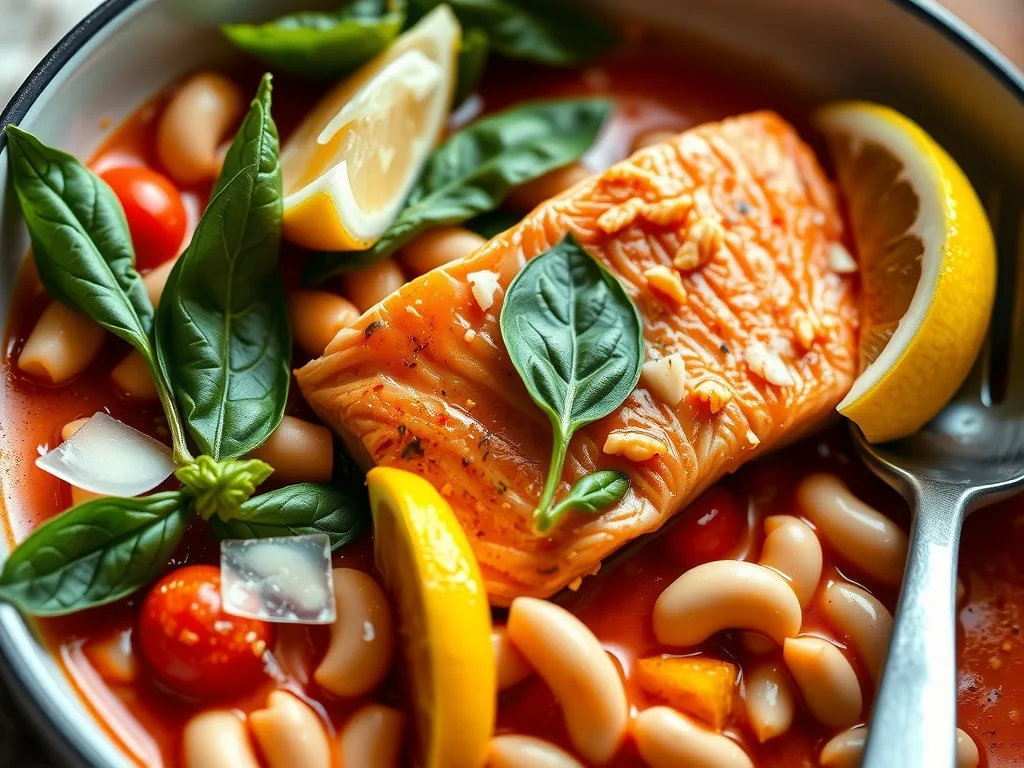
What kind of beans go well with salmon? White beans such as cannellini, great northern, or butter beans are ideal companions for salmon because their mild, creamy texture absorbs the fish’s juices without overpowering its delicate flavor. Their subtle earthiness balances the richness of salmon, while their protein and fiber content make the meal more sustaining. In this recipe, Queen White Beans (a premium cannellini variety) provide a buttery bite that melds seamlessly with the tomato‑cream sauce. If you prefer a firmer bite, try using lightly crushed chickpeas; they add a pleasant nuttiness and hold up well during simmering.
How do you make a creamy tomato sauce for beans?
A creamy tomato sauce starts with a soffritto of aromatics—shallots and garlic sautéed in olive oil until fragrant. Add chopped tomatoes (or cherry tomatoes) and tomato puree, cooking them down to release their natural sugars and acidity. Season with smoked paprika, a pinch of chili, and salt, allowing the spices to toast for a minute. Then stir in the bean liquid (or broth) and let the mixture simmer briefly. Finally, incorporate dairy—double cream, crème fraiche, or a dairy‑free alternative—while maintaining a low simmer; this emulsifies the sauce, giving it a luxurious, velvety coat that clings to each bean. Finishing with grated Parmesan adds depth and a subtle salty note that enhances the creaminess.
What kind of salmon is best for flaking?
For optimal flakiness, choose a fresh, high‑fat salmon variety such as Atlantic salmon, King (Chinook) salmon, or Sockeye salmon. These species contain more intramuscular fat, which melts during cooking and creates tender, easily separated flakes. Look for fillets with a vibrant pink‑orange hue, firm flesh, and a mild ocean scent—avoid any that appear dull or have a strong fishy smell. If using frozen salmon, thaw it slowly in the refrigerator overnight and pat dry before cooking to ensure proper searing. Skin‑on fillets help retain moisture; the skin can be left on for crispness or removed after cooking if preferred.
How do you cook salmon so it’s flaky?
The key to flaky salmon lies in gentle, even heat and avoiding overcooking. Start by patting the fillet dry and seasoning lightly with salt and pepper. Place the salmon skin‑side down in a pre‑heated, lightly oiled skillet over medium‑high heat; let it cook undisturbed for about 4‑5 minutes until the skin is crisp and the flesh turns opaque about halfway up the side. Flip carefully and cook another 2‑3 minutes, just until the center is still slightly translucent—the residual heat will finish the cooking process. Remove the salmon from the pan and let it rest, covered loosely with foil, for a few minutes. This resting period allows the juices to redistribute, resulting in moist, flaky layers that separate easily with a fork.
Conclusion
There’s a quiet joy in serving a dish that feels both indulgent and wholesome, and Creamy Tomato Beans with Flaky Salmon delivers exactly that. The creamy tomato‑infused beans cradle each flaky salmon bite, while the hint of smoky paprika and fresh basil lifts the entire plate into something truly memorable. Whether you’re winding down after a busy week or gathering loved ones around the table, this recipe offers a straightforward path to a restaurant‑worthy meal without the fuss.
We hope you give it a try, savor the layers of flavor, and share your own twists in the comments or on social media. Your feedback helps us keep refining recipes that bring comfort and joy to every kitchen. Bon appétit!
You Might Also Like
– Tuscan Salmon with Cannellini Beans and Kale – A hearty, one‑pan meal bursting with Tuscan herbs and leafy greens.
– White Bean Stew with Lemon‑Herb Salmon – Bright citrus notes elevate this comforting stew for a lighter dinner.
– Pan‑Seared Salmon over Garlic Spinach and White Beans – Simple yet elegant, perfect for weeknight elegance.
– Creamy Tuscan Chicken with White Beans and Sun‑Dried Tomatoes – Swap salmon for chicken while keeping the luscious sauce.
– Mediterranean Baked Salmon with Tomato‑Olive Relish – Oven‑baked ease paired with a tangy, briny topping.
– Smoky Paprika Shrimp and White Bean Skillet – A quick seafood alternative that shares the same smoky, creamy base.