
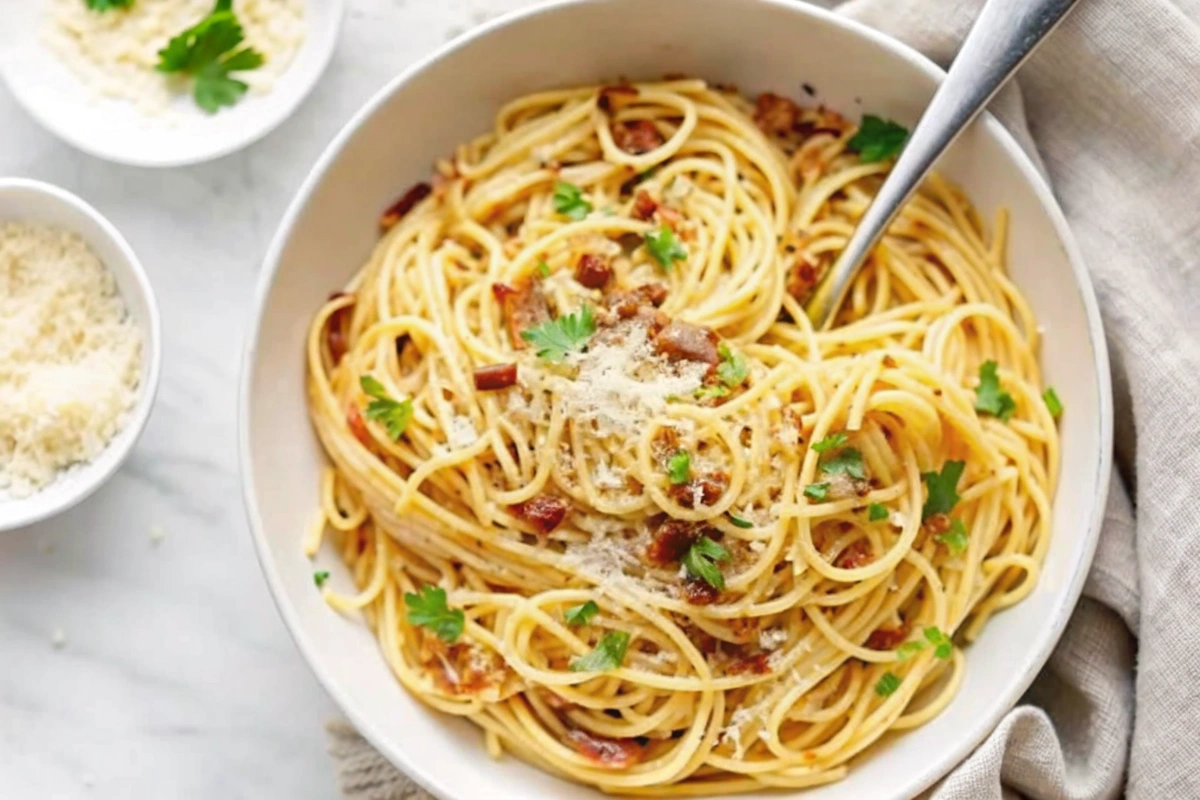
*If you’ve ever craved a silky, indulgent bowl of pasta that feels like a warm hug from Nonna, this bacon‑twisted carbonara is the answer.*
Introduction: Pasta Carbonara with Bacon
There’s something timeless about a plate of carbonara that makes it a staple on family tables, holiday spreads, and even hurried weeknight dinners. The dish balances salty pork, rich egg‑yolk custard, and a generous shower of cheese into a sauce that clings lovingly to every strand of pasta. When you swap traditional guanciale for thick‑sliced bacon, you keep the soul of the classic while adding a smoky depth that feels especially comforting on cooler evenings.
This easy pasta carbonara recipe stays true to the spirit of an authentic carbonara recipe—no cream, no unnecessary fuss—yet it’s streamlined enough for anyone who wants a restaurant‑quality meal without spending hours at the stove. The bacon renders its fat, creating a flavorful base that coats the spaghetti (or bucatini/linguine if you prefer) and helps the egg‑cheese emulsion stay smooth. A final crack of freshly ground black pepper and a sprinkle of parsley brighten the richness, making each bite feel both decadent and balanced.
Whether you’re hosting a Sunday family gathering, celebrating a birthday, or simply looking for a bacon and egg pasta that feels like a treat after a long day, this recipe fits the occasion. It’s quick enough for a Tuesday night (under 30 minutes from start to finish) yet impressive enough to serve at a dinner party where guests will ask for the secret behind that velvety sauce.
Alternate Names & Variations
- Classic Spaghetti Carbonara (with guanciale)
- Bacon‑Enhanced Carbonara
- Smoky Egg‑Yolk Pasta
- Cream‑Free Carbonara
*You’ll often see the term “easy pasta carbonara recipe” used interchangeably with these variations when home cooks seek a simpler approach.*
Ingredients: Pasta Carbonara with Bacon
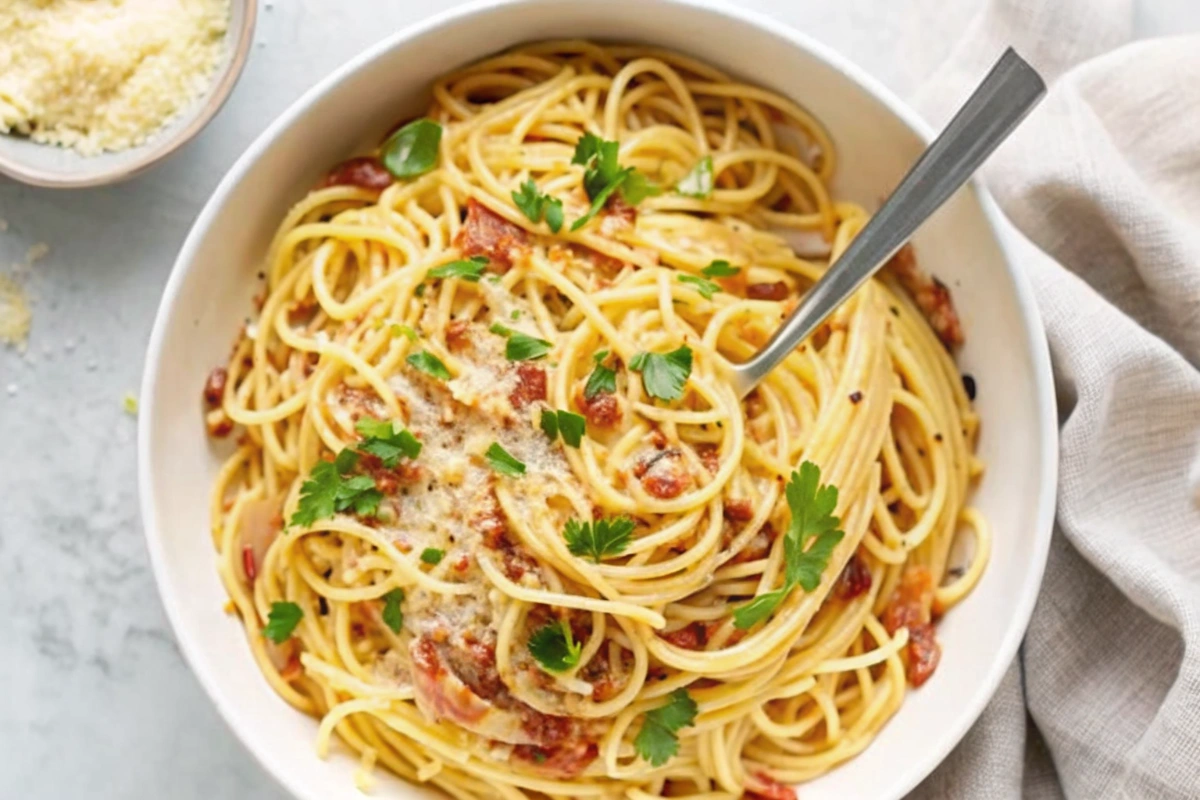
- 12 ounces (225 g) thick‑sliced bacon, cut into ½‑inch pieces
- Kosher salt, to taste (for pasta water)
- 3 large egg yolks
- 1 large whole egg
- ½ cup freshly grated Parmesan cheese, plus more for serving
- ½ cup freshly grated Pecorino Romano cheese, plus more for serving
- Freshly ground black pepper, to taste
- 1 pound (450 g) dried spaghetti, bucatini or linguine pasta – ¼ cup chopped fresh Italian parsley
Step‑by‑Step Instructions
- Prep the ingredients – While a large pot of salted water comes to a boil, whisk together the egg yolks, whole egg, grated Parmesan, Pecorino, and a generous pinch of black pepper in a bowl. Set aside; the mixture should look thick and pale.
- Render the bacon – In a large skillet over medium heat, add the bacon pieces. Cook, stirring occasionally, until the fat has melted and the bacon is crisp‑golden, about 6‑8 minutes. Use a slotted spoon to transfer the bacon to a paper‑towel‑lined plate, leaving the rendered fat in the pan.
- Cook the pasta – Add the spaghetti (or your chosen shape) to the boiling salted water. Cook according to package directions until al dente, usually 9‑11 minutes. Reserve 1 cup of the hot pasta water, then drain the pasta.
- Combine pasta and bacon fat – Return the drained pasta to the skillet with the bacon fat. Toss over low heat for 30 seconds to coat the noodles in the smoky fat.
- Temper the egg mixture – Slowly drizzle about ½ cup of the reserved hot pasta water into the egg‑cheese bowl while whisking constantly. This raises the temperature of the eggs gently, preventing them from scrambling when they meet the hot pasta.
- Create the sauce – Pour the tempered egg mixture over the pasta in the skillet, tossing vigorously. The heat from the pasta will thicken the custard into a silky sauce. If the sauce feels too thick, add splashes of the reserved pasta water, a tablespoon at a time, until you reach a glossy, coating consistency.
- Add bacon and parsley – Stir in the crisp bacon bits and chopped fresh parsley. Taste and adjust seasoning with extra black pepper or a pinch of salt if needed.
- Serve immediately – Divide the carbonara among warm plates, top with additional grated Parmesan and Pecorino, and finish with a crack of black pepper. Enjoy while the sauce is luxuriously creamy.
Chef Tips & Substitutions
– For a deeper flavor, use half bacon, half pancetta or guanciale.
– If you prefer a milder cheese note, substitute half of the Pecorino with more Parmesan.
– A splash of dry white wine added to the bacon fat before the pasta can brighten the dish without breaking tradition.
– To keep the sauce extra smooth, ensure the pasta is still hot when you add the egg mixture; the residual heat does the cooking.
Recipe Card Block (Quick Reference)
Prep time: 10 minutes | Cook time: 20 minutes | Total time: 30 minutes | Servings: 4 | Approx. calories per serving: 560 kcal
Why This Recipe Works & Expert Tips
This easy pasta carbonara recipe works because it honors the traditional technique of emulsifying egg yolks and cheese with the starchy pasta water, while the bacon supplies both fat and a smoky backbone that replaces the harder‑to‑find guanciale. The key to a flawless carbonara is temperature control: the pasta must be hot enough to gently cook the egg mixture, but not so hot that the eggs curdle. By tempering the eggs with a ladle of hot pasta water before they hit the pan, you create a stable emulsion that yields that signature velvety coating.
Using thick‑sliced bacon adds a pleasant chew and a deeper, wood‑smoked notes that pair beautifully with the sharp Pecorino and nutty Parmesan. The fresh parsley not only adds a pop of color but also a subtle herbal lift that cuts through the richness, making each bite feel balanced rather than heavy. For those seeking an authentic carbonara recipe without the hunt for specialty cured pork, this bacon version delivers the same luxurious mouthfeel with ingredients most pantries already stock.
Storage, Freezing, and Reheating Tips
Carbonara is best enjoyed fresh, but leftovers can be stored safely for up to two days in an airtight container in the refrigerator. When reheating, place the pasta in a skillet over low heat and add a splash of milk or reserved pasta water to loosen the sauce; stir gently until warmed through. Avoid microwaving on high power, as the intense heat can cause the eggs to seize and turn grainy.
Freezing is not recommended for traditional carbonara because the egg‑based sauce can separate and become watery upon thawing. If you must freeze, undercook the pasta slightly, freeze the noodles and bacon separately, and combine with a freshly made sauce when you’re ready to serve.
People Also Ask: Pasta Carbonara with Bacon
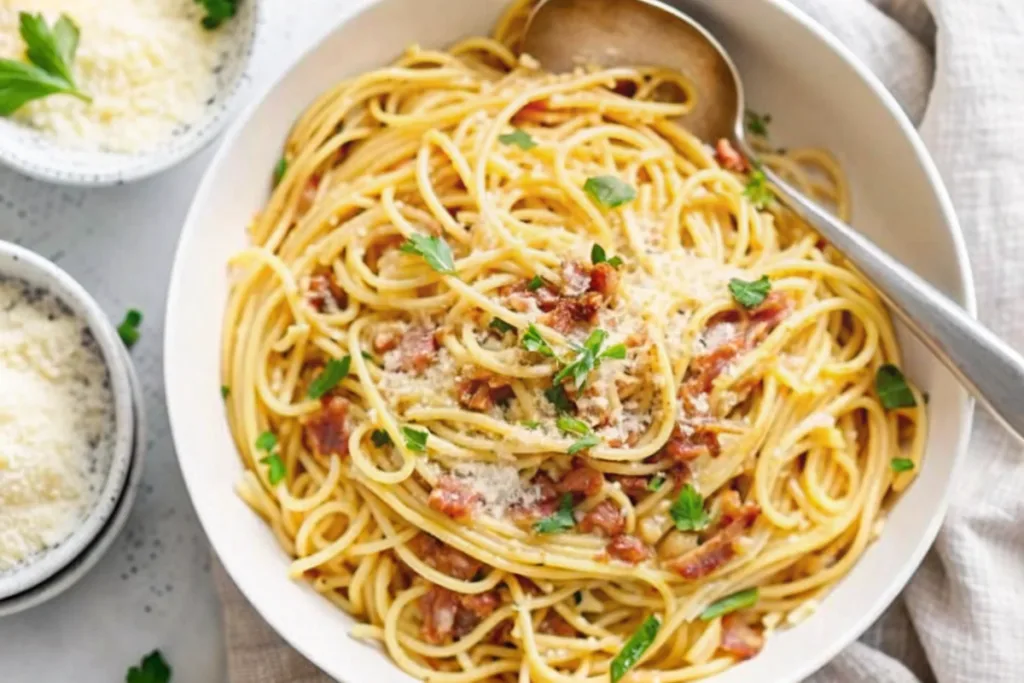
What is the secret to a good carbonara?
The secret lies in the emulsion. A good carbonara relies on the gentle heat of hot pasta to thicken a mixture of egg yolks, whole egg, grated cheese, and a splash of starchy pasta water into a creamy sauce without scrambling the eggs. Proper tempering—gradually whisking hot water into the egg mixture before combining it with the pasta—prevents curdling and yields that glossy, velvety texture that clings to every strand. Using quality ingredients—freshly grated Parmesan and Pecorino, freshly cracked black pepper, and well‑rendered bacon—also elevates the flavor.
Should you use bacon in carbonara?
Traditional carbonara calls for guanciale, but bacon is an excellent, accessible substitute that still delivers the needed fat and smoky depth. Thick‑sliced bacon renders slowly, providing a rich base that coats the pasta and helps the egg‑cheese emulsion stay smooth. While the flavor profile differs slightly—bacon is smokier and saltier than guanciale—it creates a comforting, crowd‑pleasing version that works beautifully for weeknight meals or family gatherings.
How do you make carbonara sauce without scrambling the eggs?
To avoid scrambled eggs, you must control the temperature when introducing the egg mixture to the hot pasta. First, whisk the eggs and cheeses together, then temper them by slowly drizzling in about½ cup of the hot reserved pasta water while whisking constantly. This raises the egg mixture’s temperature gradually. Once tempered, pour the mixture over the hot pasta off direct heat, tossing vigorously. The residual heat from the pasta cooks the eggs just enough to thicken the sauce without forming curds.
Is there cream in a traditional carbonara?
No, authentic carbonara does not contain cream. The creaminess comes solely from the emulsion of egg yolks, whole egg, grated cheeses, and pasta water. Adding cream is a common adaptation outside Italy, but it masks the delicate balance of flavors and alters the texture. Sticking to the egg‑based method ensures a lighter, more luxurious sauce that highlights the pork, cheese, and pepper.
Conclusion: Pasta Carbonara with Bacon
There’s a reason carbonara has remained a beloved classic for generations: it’s simple, satisfying, and deeply comforting. By using thick‑sliced bacon, you keep the spirit of the dish intact while adding a smoky note that feels especially inviting on cooler nights. Give this easy pasta carbonara recipe a try tonight—whether you’re feeding a hungry family after work or treating friends to a relaxed weekend dinner.
We’d love to hear how it turned out! Drop a comment below with your tweaks, share a photo on social media, or let us know what side dish you paired it with. Your feedback helps us keep refining recipes that bring joy to the table.
You Might Also Like:
- Amish Tomato Pie – The Best Comfort Dish to Try This Summer
- Smoked Meatloaf Recipe: Juicy & Flavorful
- Best Spicy Cajun Salmon Recipe – Quick & Flavorful Dinner Idea! 🐟🌶️✨
- Ultimate CrackerBarrel Meatloaf Recipe – Easy & Comforting Dish!
Find Us On Pinterest and Facebook.
Print
Pasta Carbonara with Bacon
- Total Time: 30 minutes
- Yield: 4 servings 1x
Description
Indulge in the rich, creamy flavors of classic Italian Pasta Carbonara with crispy bacon. This simple yet luxurious dish combines al dente spaghetti, a silky egg‑cheese sauce, and smoky bacon for a comforting meal that’s perfect for weeknight dinners or weekend gatherings.
Ingredients
- 12 ounces (225 g) thick‑sliced bacon
- Kosher salt
- 3 large egg yolks
- 1 large whole egg
- ½ cup freshly grated Parmesan cheese, plus more for serving
- ½ cup freshly grated Pecorino Romano cheese, plus more for serving
- Freshly ground black pepper, to taste
- 1 pound (450 g) dried spaghetti, bucatini, or linguine
- ¼ cup chopped fresh Italian parsley
Instructions
- Bring a large pot of salted water to a boil. Add the spaghetti and cook until al dente, about 9‑11 minutes. Reserve 1 cup of pasta water, then drain.
- While the pasta cooks, place the bacon in a large skillet over medium heat. Cook until crisp, about 5‑6 minutes. Transfer to a paper‑towel‑lined plate and crumble.
- In a bowl, whisk together the egg yolks, whole egg, grated Parmesan, grated Pecorino, and a generous pinch of black pepper until smooth.
- Reduce the skillet heat to low. Add the hot pasta to the bacon and toss to coat.
- Slowly pour the egg‑cheese mixture over the pasta, tossing constantly to create a creamy sauce. If the sauce seems too thick, add reserved pasta water a tablespoon at a time until silky.
- Stir in the chopped parsley, adjust seasoning with more pepper or cheese if desired, and serve immediately.
Notes
Tip: For an extra smoky flavor, use pancetta or Guanciale. If you’re avoiding pork, substitute turkey bacon or omit the meat entirely. The sauce can be reheated gently on low heat, adding a splash of milk or water to loosen it. Store leftovers in an airtight container in the refrigerator for up to 2 days.
- Prep Time: 10 minutes
- Cook Time: 20 minutes
- Category: B
- Method: Stovetop
- Cuisine: Italian
Nutrition
- Serving Size: 1 serving
- Calories: 560
- Sugar: 2
- Sodium: 850
- Fat: 32
- Saturated Fat: 13
- Unsaturated Fat: 15
- Trans Fat: 0
- Carbohydrates: 44
- Fiber: 2
- Protein: 22
- Cholesterol: 155
Keywords: pasta, carbonara, bacon, Italian, comfort food