
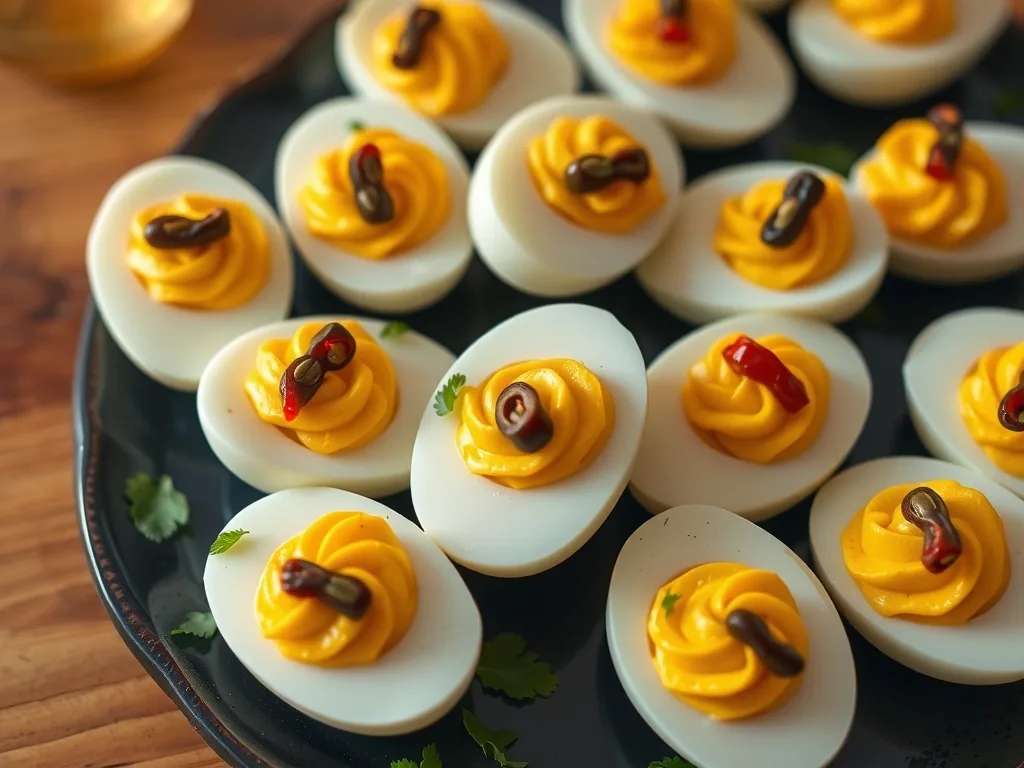
SpanishDeviled Eggs – Classic Tapas Twist
Introduction: Spanish Deviled Eggs
If you’ve ever wondered how to turn a humble hard‑boiled egg into a vibrant, crowd‑pleasing bite, meet Spanish deviled eggs. Rooted in the bold flavors of Spain’s tapas culture, these eggs marry creamy yolk fillings with smoky chorizo, briny pimientos, and a whisper of capers that make each bite feel both familiar and adventurous. For the home cook aged 40‑65, they offer a nostalgic nod to family gatherings while inviting a fresh, Mediterranean flair to modern tables. Whether you’re preparing a festive brunch, a potluck side, or a sophisticated appetizer for a soirée, this recipe delivers on taste, texture, and visual appeal—without demanding hours of culinary wizardry.
The magic lies in the balance of richness and acidity, the satisfying crunch of olives, and the subtle heat of smoked paprika that crowns each half‑egg. In this guide you’ll discover not just *how* to make them, but *why* they work, the best substitutions for pantry staples, and clever storage tricks that keep leftovers fresh. Ready to elevate your snacking game? Let’s dive in and explore the delicious world of Spanish deviled eggs together.
Alternate Names & Variations Spanish deviled eggs are known by several tantalizing titles across the Iberian Peninsula and beyond. You may encounter them labeled as huevos rellenos de atún, highlighting the tuna‑based filling that appears in many coastal versions. In regional tapas bars, they are sometimes called tapas deviled eggs, emphasizing their role as a shareable small plate. While the classic recipe features a chorizo‑infused yolk mixture, variations abound: some chefs fold in smoked salmon, others swap in roasted red pepper puree for a sweeter profile, and a few even incorporate avocado for a modern, creamy twist.
These adaptations keep the core concept intact—a halved egg filled with a seasoned mixture—but let you tailor the dish to seasonal ingredients or personal taste. By experimenting with different cured meats, herb combinations, or spice blends, you can create a signature version that feels both authentic and uniquely yours.
Ingredients: Spanish Deviled Eggs
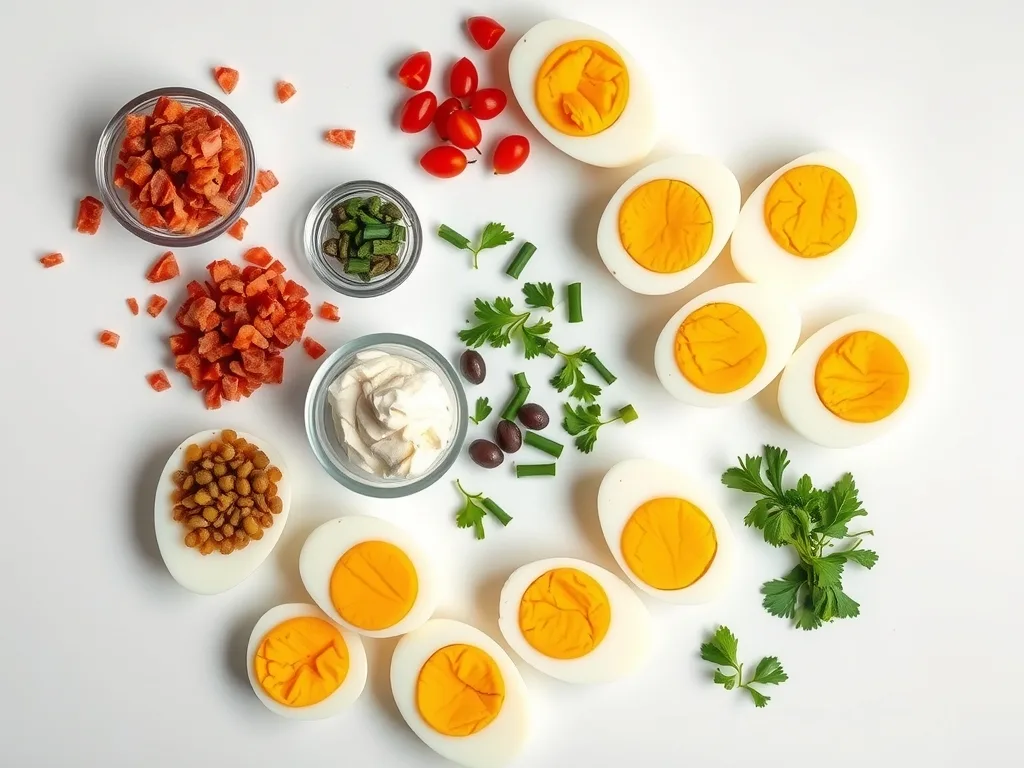
To craft these flavorful morsels, gather the following descriptive, SEO‑friendly components:
– 12 shelled hard‑boiled eggs, perfectly peeled and cut lengthwise, yolks gently scooped out
– 4 ounces Spanish dry‑cured chorizo, finely diced for a smoky depth
– 3 tablespoons jarred pimientos, drained and patted dry, then finely chopped
– 3 tablespoons black or green olives, rinsed and patted dry, then finely chopped
– 2 tablespoons capers, rinsed and patted dry, then finely chopped
– 1 tablespoon fresh parsley, freshly chopped for brightness
– ⅓ cup mayonnaise, provides a silky base
– 1 tablespoon Dijon mustard, adds subtle tang
– ⅛ teaspoon kosher salt and ⅛ teaspoon freshly ground black pepper, essential seasoning
– Smoked paprika, for a final sprinkle of color and aroma
– Extra chopped parsley, optional garnish for visual appeal
These ingredients blend tradition with a hint of modern sophistication, ensuring every bite sings with layered flavor.
Step‑by‑Step Instructions: Spanish Deviled Eggs
1. Prepare the eggs – Place the hard‑boiled eggs in a saucepan of cold water, bring to a gentle boil, then simmer for 9 minutes. Transfer to an ice bath, peel, and slice each egg lengthwise.
2. Remove yolks carefully – Using a small spoon, scoop out the yolks into a mixing bowl, taking care not to tear the white halves.
3. Cook the chorizo – In a skillet over medium heat, sauté the diced chorizo until crisp and the fat renders, about 3 minutes. Set aside to cool.
4. Blend the filling – To the yolks, add mayonnaise, Dijon mustard, chopped parsley, salt, and pepper. Mix until smooth and creamy.
5. Incorporate flavor boosters – Fold in the cooled chorizo, chopped pimientos, olives, capers, and a pinch of smoked paprika. Taste and adjust seasoning if needed. 6. Pipe or spoon the mixture – Fill each egg white half with the seasoned yolk mixture, using a piping bag for a polished look or a teaspoon for a homestyle touch.
7. Finish and serve – Sprinkle the tops with extra smoked paprika and a few parsley leaves for color. Serve chilled on a platter, ready to wow your guests.
Chef’s tip: If you’re short on chorizo, substitute with finely diced bacon or smoked turkey for a milder smoke note. For a vegetarian version, replace the meat with roasted red pepper strips and increase the caper amount for briny depth.
Recipe Card Reference: Spanish Deviled Eggs
This recipe yields 12 halves (24 individual deviled egg pieces), perfect for serving 8–10 guests as an appetizer. Expect a prep time of 20 minutes, cook time of 15 minutes (mostly for chorizo), and a total time of 35 minutes from start to finish. While not a low‑calorie dish, each serving contains roughly 110 calories, making it a satisfying yet modest indulgence that fits well within a balanced menu.
Why This Recipe Works & Expert Tips: Spanish Deviled Eggs
The brilliance of Spanish deviled eggs lies in the harmony of textures and flavors—a creamy yolk base brightened by the acidity of mustard, enriched by the buttery mouthfeel of mayo, and lifted by the salty bite of olives and capers. The addition of chorizo introduces a deep, smoky umami that distinguishes these eggs from traditional American deviled versions, which often rely solely on mustard and relish for flavor. By integrating pimientos and smoked paprika, the dish captures the essence of Spanish tapas: a balance of sweet, salty, and smoky notes that linger on the palate.
For those seeking gluten‑free or low‑sugar adaptations, the recipe is naturally compliant; just ensure any added sauces are free from hidden additives. If you desire extra protein, consider folding in a tablespoon of canned tuna or shredded cooked chicken into the filling. Finally, a quick flash‑freeze of the filled eggs after piping locks in freshness and prevents the yolks from drying out, ensuring every bite remains lush and flavorful.
Storage, Freezing, and Reheating
Leftover Spanish deviled eggs store best in an airtight container in the refrigerator for up to 2 days. Keep them chilled on a bed of ice if serving at a buffet to maintain optimal temperature. For longer preservation, arrange the filled egg halves on a parchment sheet, flash‑freeze for 1 hour, then transfer to a freezer‑safe bag; they will retain quality for up to 3 months. When reheating, avoid microwaves—simply let them thaw in the fridge overnight and serve chilled, as reheating can alter the delicate texture of the whites.
People Also Ask: Spanish Deviled Eggs
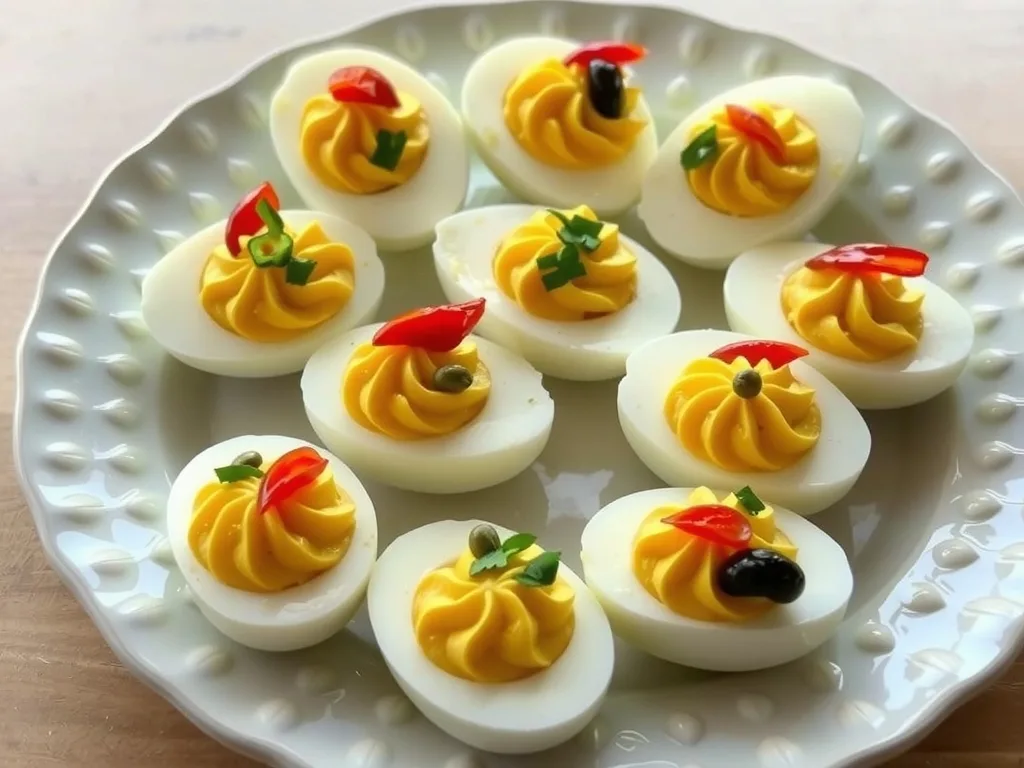
What is in Spanish deviled eggs?
Spanish deviled eggs combine hard‑boiled egg whites with a seasoned yolk mixture that typically includes mayonnaise, Dijon mustard, salt, pepper, smoked paprika, and a variety of flavorful add‑ins such as finely diced Spanish chorizo, chopped pimientos, olives, and capers. Fresh parsley is often stirred in for brightness, and the finished halves are garnished with an extra dusting of paprika and parsley. This blend creates a rich, creamy filling punctuated by salty, smoky, and slightly sweet notes that set the dish apart from standard deviled eggs.
How are Spanish deviled eggs different from American deviled eggs?
The primary distinction lies in flavor profile and regional ingredients. Traditional American deviled eggs typically feature a basic filling of yolks mixed with mayonnaise, mustard, and a dash of vinegar or relish, resulting in a milder taste. Spanish deviled eggs, however, incorporate chorizo, pimientos, capers, and olives, introducing smoky, briny, and slightly sweet dimensions. The use of smoked paprika adds a distinctive reddish hue and aromatic depth. These ingredients reflect Spain’s tapas tradition, offering a more complex and savory experience compared to the simple, often sweet‑tangy American version.
What is the tuna filling made of?
A tuna‑based Spanish deviled egg filling merges flaked canned tuna with mayonnaise, Dijon mustard, and a pinch of salt and pepper to create a creamy spread. Finely chopped olives, capers, and pimientos are typically folded in for texture and briny contrast. Some recipes also add a splash of lemon juice or a pinch of smoked paprika for extra zest. The result is a robust, tangy mixture that mirrors the oceanic flavors of coastal Spain while complementing the egg’s richness.
Are Spanish deviled eggs served hot or cold?
Spanish deviled eggs are traditionally served cold or at room temperature. After preparation, the filled egg halves are typically chilled for a short period to allow flavors to meld and to maintain the integrity of the whites. Serving them cold enhances the crispness of the garnish, such as smoked paprika and fresh parsley, and provides a refreshing contrast to warm dishes. However, they can be presented at a relaxed buffet temperature if kept on a chilled serving tray.
Conclusion: Spanish Deviled Eggs
There you have it—your complete guide to mastering Spanish deviled eggs, from the sizzling chorizo to the final sprinkle of smoked paprika. These bite‑size treasures capture the spirit of Spanish tapas while delivering a familiar comfort that feels new and exciting. Feel free to experiment with variations, share your creations on social media, and invite friends to experience the delightful blend of textures and flavors. When you try this recipe, we’d love to hear how it turned out; a quick comment or a photo tag can inspire fellow food lovers to give it a go. Happy cooking, and may your table always be filled with tasty, eye‑catching delights!
You Might Also Like
- Amish Tomato Pie – The Best Comfort Dish to Try This Summer
- Smoked Meatloaf Recipe: Juicy & Flavorful
- Best Spicy Cajun Salmon Recipe – Quick & Flavorful Dinner Idea! 🐟🌶️✨
- Ultimate CrackerBarrel Meatloaf Recipe – Easy & Comforting Dish!
Find Us On Pinterest and Facebook.
Print
Spanish Deviled Eggs with Chorizo and Pimientos
- Total Time: 25 minutes
- Yield: 12 halves (serves 6) 1x
- Diet: Gluten-free
Description
A flavorful twist on classic deviled eggs, featuring smoky Spanish chorizo, briny olives, and bright pimientos.
Ingredients
- 12 shelled hard-boiled eggs, cut in half lengthwise and yolks scooped out
- 4 ounces Spanish dry-cured chorizo, finely diced
- 3 tablespoons jarred or canned pimientos, drained, patted dry and finely chopped
- 3 tablespoons black or green olives, rinsed, patted dry and finely chopped
- 2 tablespoons capers, rinsed, patted dry and finely chopped
- 1 tablespoon chopped fresh parsley
- 1/3 cup mayonnaise
- 1 tablespoon Dijon mustard
- 1/8 teaspoon kosher salt
- 1/8 teaspoon freshly ground black pepper
- smoked paprika, for sprinkling
- Extra chopped parsley for sprinkling
- 1 teaspoon olive oil
Instructions
- Heat olive oil in a skillet over medium heat and sauté the diced chorizo until crisp, about 3 minutes; set aside to cool.
- In a bowl, combine the egg yolks with mayonnaise, Dijon mustard, kosher salt, and black pepper; mix until smooth.
- Fold in the sautéed chorizo, chopped pimientos, olives, capers, and fresh parsley into the yolk mixture.
- Pipe or spoon the yolk mixture back into the egg white halves, filling them generously.
- Sprinkle the tops with smoked paprika and extra chopped parsley for garnish.
- Serve immediately or chill for up to 2 hours before serving.
Notes
For a richer flavor, you can add a squeeze of fresh lemon juice to the yolk filling.
- Prep Time: 20 minutes
- Cook Time: 5 minutes
- Category: Appetizer
- Method: Boiled and sautéed
- Cuisine: Spanish
Nutrition
- Serving Size: 2 egg halves
- Calories: 250 kcal
- Sugar: 1g
- Sodium: 500mg
- Fat: 18g
- Saturated Fat: 3g
- Unsaturated Fat: 12g
- Trans Fat: 0g
- Carbohydrates: 5g
- Fiber: 1g
- Protein: 12g
- Cholesterol: 400mg