
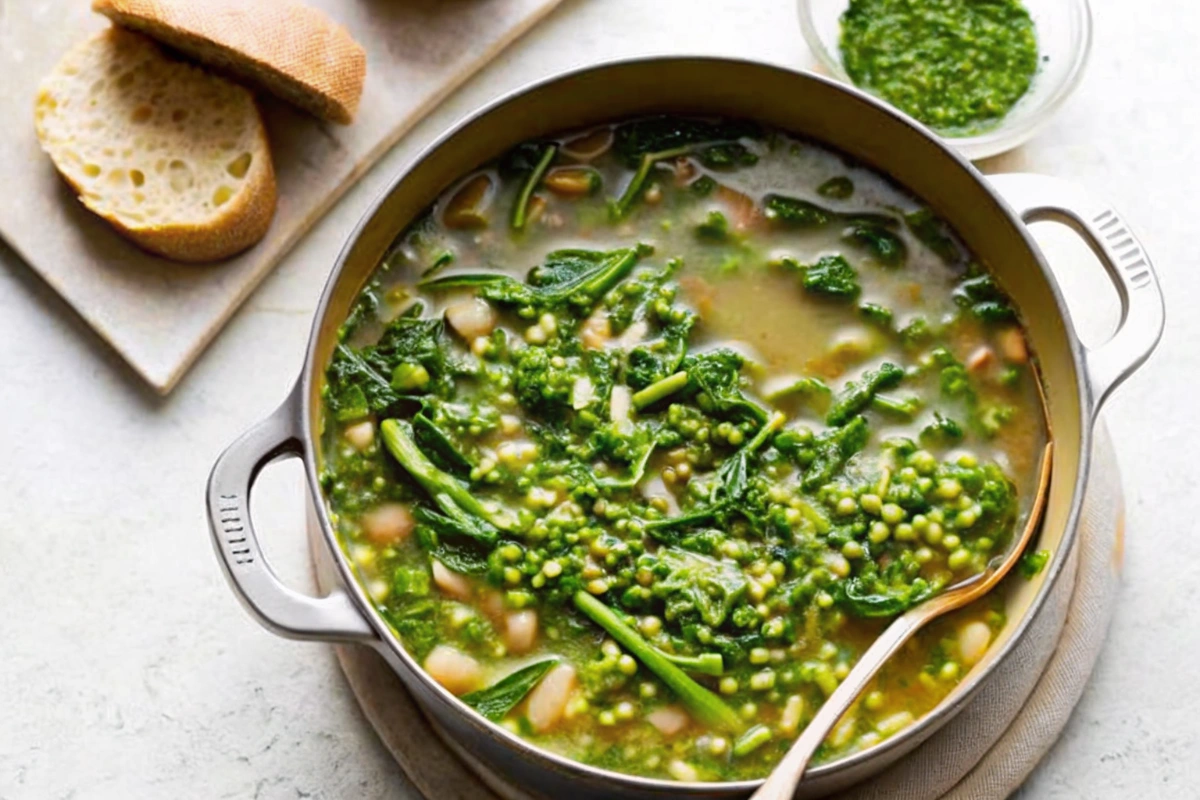
Introduction: Spring Minestrone with Kale and Pasta
Spring Minestrone with Kale and Pasta is more than just a soup; it’s a celebration of the season’s earliest vegetables tangled together with tender pasta, savory broth, and a whisper of ginger that lifts every spoonful. The dish marries the earthy depth of a traditional minestrone with the bright, slightly bitter notes of baby kale (or spinach) and the crisp snap of asparagus, peas, and zucchini. Because it builds on a foundation of low‑sodium chicken or vegetable stock, the soup stays light enough for a lunch‑time bowl yet substantial enough to satisfy a family dinner after a long day.
What makes this version truly special is its flexibility. You can swap in frozen peas when fresh aren’t available, use ditalini or any small‑shaped pasta you have on hand, and finish each bowl with a dollop of store‑bought pesto and a shower of grated Parmesan for an instant burst of umami. Whether you’re serving it at a leisurely Sunday brunch, a weekday family meal, or even as a make‑ahead option for holiday leftovers, Spring Minestrone with Kale and Pasta adapts beautifully to any occasion. The result is a hearty vegetable and pasta soup that feels both familiar and refreshingly new—a Tuscan kale soup‑inspired bowl that’s packed with fiber, vitamins, and the kind of comfort that only a well‑balanced minestrone can deliver.
Beyond its taste, the soup is a practical win for busy cooks. The base comes together in under 30 minutes, and the pasta cooks directly in the broth, so there’s no extra pot to wash. Leftovers taste even better the next day as the flavors meld, making it an ideal candidate for meal prep or freezing. In short, if you’ve been searching for a recipe that captures the spirit of spring while honoring the timeless appeal of minestrone with kale and beans, you’ve found it.
Alternate Names & Variations
- Tuscan kale soup with pasta – emphasizes the leafy green and Mediterranean inspiration.
- Hearty vegetable and pasta soup – a broader description that highlights the soup’s substance.
- Minestrone with kale and beans – a classic version you can create by adding a can of cannellini or borlotti beans.
- Spring garden minestrone – focuses on the seasonal vegetables like asparagus, peas, and zucchini.
Feel free to experiment: add a handful of chopped fresh basil at the end for a fragrant lift, or stir in a tablespoon of tomato paste with the aromatics for a deeper, reddish hue.
Ingredients: Spring Minestrone with Kale and Pasta
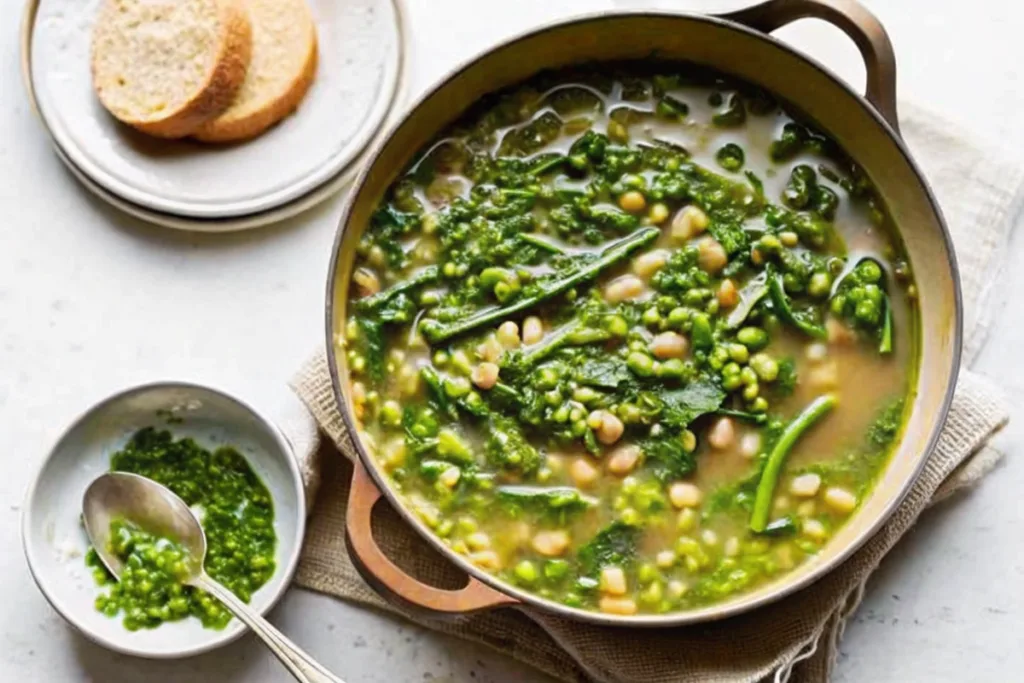
- ¼ cup extra‑virgin olive oil
- 2 large shallots or 1 small onion, thinly sliced
- 2 celery stalks, thinly sliced
- Kosher salt and freshly ground black pepper, to taste
- 2 tablespoons minced fresh ginger (optional, adds a bright zing)
- 2 tablespoons minced garlic
- 2 quarts low‑sodium chicken or vegetable stock
- 1 cup ditalini or other small‑shaped pasta (about 5 oz)
- 8 oz asparagus, trimmed and sliced into ½‑inch pieces (≈1½ cups)
- 1 cup thinly sliced zucchini or chopped broccoli florets
- 1 cup fresh or frozen peas
- 5 oz baby kale, baby spinach, or torn spinach (≈4 cups loosely packed)
- Store‑bought pesto, for serving
- Grated Parmesan cheese, for serving
*Note:* If you prefer a bean‑filled minestrone, stir in a 15‑oz can of rinsed cannellini beans during the last 5 minutes of cooking.
Step‑by‑Step Instructions
- Heat the oil. In a large Dutch oven or heavy‑bottomed pot, warm the olive oil over medium heat.
- Sweat the aromatics. Add the sliced shallots (or onion) and celery. Season lightly with salt and pepper. Cook, stirring occasionally, until the vegetables become translucent and fragrant, about 4‑5 minutes.
- Add ginger and garlic. Stir in the minced ginger (if using) and garlic. Cook for another 30 seconds—just until the raw smell disappears; be careful not to burn the garlic.
- Build the broth. Pour in the low‑sodium stock and bring the mixture to a gentle boil. 5. Introduce the pasta. Add the ditalini (or your chosen small pasta) and cook according to the package directions, usually 8‑10 minutes, stirring occasionally to prevent sticking.
- Add the spring vegetables. When the pasta is about halfway done (around 4‑5 minutes in), toss in the asparagus pieces, zucchini (or broccoli), and peas. Continue cooking until the pasta is al dente and the vegetables are tender‑crisp, roughly 3‑4 more minutes.
- Finish with greens. Reduce the heat to low and stir in the baby kale (or spinach). The greens will wilt in just 1‑2 minutes; season with additional salt and pepper to taste.
- Serve with flair. Ladle the soup into warm bowls. Top each serving with a spoonful of pesto and a generous sprinkle of grated Parmesan. Offer extra pesto on the side for those who love an extra herbaceous kick.
- Enjoy immediately. The soup is best enjoyed while the pasta retains a slight bite and the greens are vivid green. Chef’s Tips & Substitutions
- *Gluten‑free:* Replace ditalini with gluten‑free mini shells or quinoa pasta; adjust cooking time as needed. – *Protein boost:* Add a cup of cooked chickpeas or white beans alongside the pasta for a heartier minestrone with kale and beans.
- *Flavor depth:* A splash of dry white wine added with the stock brightens the broth; simmer 2 minutes before proceeding.
- *Herb finish:* Fresh basil or a pinch of dried oregano stirred in at the end adds a classic Tuscan kale soup aroma.
Recipe Card Block (Quick Reference)
This Spring Minestrone with Kale and Pasta comes together in about 20 minutes of prep and 20 minutes of cooking, for a total time of roughly 40 minutes. The recipe yields 4 generous servings, each containing approximately 320 calories (depending on the exact amount of pasta and cheese used). Feel free to double the batch for leftovers or freezing.
Why This Recipe Works & Expert Tips
The success of this Spring Minestrone with Kale and Pasta lies in its layered cooking technique. By sautéing the shallots, celery, ginger, and garlic first, we create a flavor foundation that infuses the entire broth. Adding the pasta directly to the simmering stock allows it to release starches that naturally thicken the soup, eliminating the need for a roux or cream. The staggered addition of vegetables—starting with the firmer asparagus and finishing with delicate greens—ensures each component retains its ideal texture: the pasta stays al dente, the asparagus remains crisp‑tender, and the kale wilts just enough to release its nutrients without turning mushy.
Because we use low‑sodium stock, you control the salt level, making the dish adaptable to various dietary needs. The optional ginger adds a subtle warmth that complements the sweet peas and brightens the earthy kale, a twist that lifts the classic minestrone with kale and beans into something distinctly spring‑like. Finishing with pesto and Parmesan not only adds richness but also introduces a fragrant, herbaceous note that balances the soup’s vegetal backbone. For those seeking easy comfort food for family dinners, this recipe delivers a one‑pot meal that feels indulgent yet is packed with fiber, vitamins A, C, and K, and plant‑based protein. It’s also a fantastic way to use up any lingering spring produce from the farmer’s market, making it both economical and environmentally friendly.
Storage, Freezing, and Reheating Tips
Allow the soup to cool to room temperature before transferring it to airtight containers. Stored in the refrigerator, Spring Minestrone with Kale and Pasta stays fresh for up to four days; the flavors often deepen, making leftovers even more satisfying. For longer storage, freeze the soup in portion‑sized freezer‑safe bags or containers for up to three months.
When freezing, it’s best to slightly undercook the pasta (by about 1‑2 minutes) because it will continue to absorb liquid during thawing and reheating, preventing it from becoming overly soft. To reheat, thaw the soup overnight in the fridge, then warm it gently over medium‑low heat, stirring occasionally. If the broth has thickened too much, add a splash of water or stock to reach your desired consistency. Finish each reheated bowl with a fresh drizzle of pesto and a sprinkle of Parmesan to revive the bright, herbaceous notes that can dull after freezing. These storage tips ensure that your hearty vegetable and pasta soup remains a convenient, nourishing option for busy weeknights or unexpected guests.
People Also Ask: Spring Minestrone with Kale and Pasta
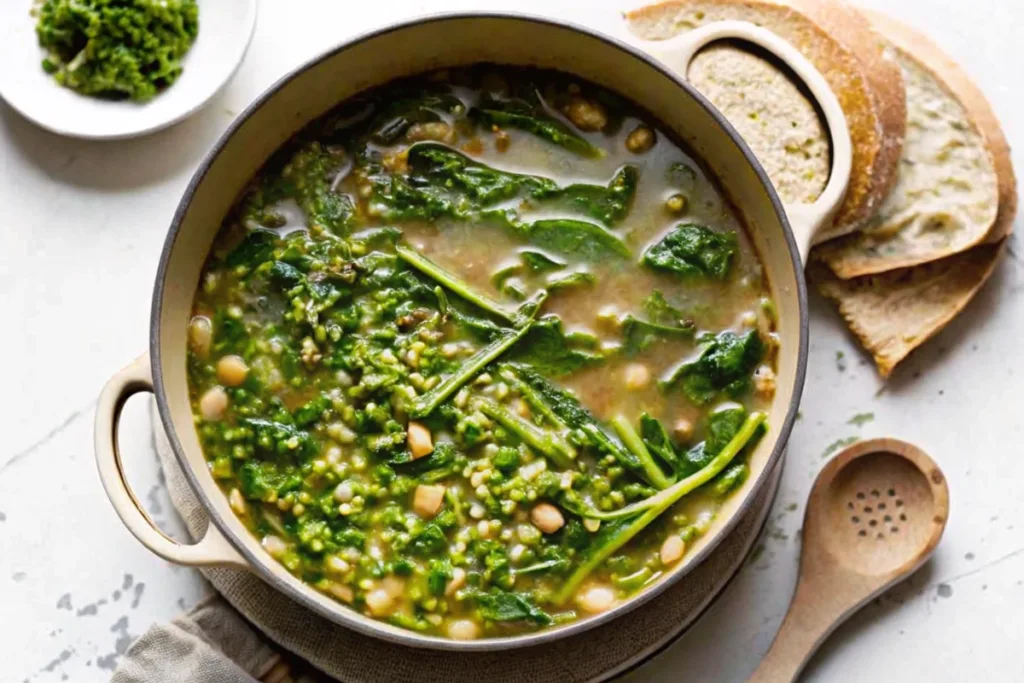
What pasta is best for minestrone soup?
Small‑shaped pastas such as ditalini, elbow macaroni, petite shells, or orzo work best in minestrone because they cook quickly and hold up well in broth without becoming mushy. Their compact size allows each spoonful to contain a balanced bite of pasta, vegetables, and beans. If you prefer a gluten‑free option, try mini quinoa pasta or rice‑based shapes; just keep an eye on the cooking time as they may vary. Avoid long strands like spaghetti or linguine, as they can overwhelm the soup’s texture and make serving awkward. Ultimately, the best pasta is one that you enjoy and that complements the soup’s hearty, chunky character.
When should I add kale to soup?
Add sturdy greens like kale toward the end of cooking so they retain their vibrant color, texture, and nutritional value. For baby kale or spinach, stir them in during the last 1‑2 minutes of simmering; they will wilt quickly without overcooking. If you’re using curly or Lacinato kale with thicker stems, chop the leaves finely and add them about 4‑5 minutes before the soup is done, giving the stems a little extra time to soften. Adding kale too early can result in a dull, overly soft green that loses its pleasant bite, while adding it too late may leave it tough. Timing the greens correctly ensures a pleasant, slightly bitter note that balances the sweetness of the peas and the richness of the broth.
How can I add flavor to my minestrone soup?
Layering flavors is key to a memorable minestrone. Start with a soffritto of aromatics—onion, celery, carrot (if using), and garlic—sweated in olive oil until fragrant. A splash of dry white wine or a tablespoon of tomato paste added with the stock deepens the base. Herbs such as fresh thyme, rosemary, or a bay leaf simmered with the broth impart earthy undertones; remove the bay leaf before serving. Finish with a bright element like lemon zest, a pinch of red‑pepper flakes, or a dollop of pesto for freshness. Finally, a generous grating of Parmesan or a drizzle of high‑quality extra‑virgin olive oil right before serving adds umami and richness. Experiment with these additions to tailor the soup to your palate while keeping the comforting essence of minestrone intact.
Can you freeze minestrone with pasta in it?
Yes, you can freeze minestrone with pasta, but a few precautions help maintain quality. Cook the pasta just shy of al dente (about 1‑2 minutes less than the package directions) before freezing, as it will continue to absorb liquid during thawing and reheating, preventing a gummy texture. Cool the soup completely, then portion it into freezer‑safe containers or heavy‑duty freezer bags, leaving about an inch of headspace for expansion. Label with the date and use within three months for optimal flavor. When ready to eat, thaw the soup overnight in the refrigerator, then reheat gently over low‑medium heat, adding a splash of stock or water if the broth has thickened. Finish each serving with fresh pesto and Parmesan to revive the bright notes that may mute after freezing.
Conclusion: Spring Minestrone with Kale and Pasta
We hope this recipe inspires you to bring the fresh, vibrant flavors of spring into your kitchen with a bowl that’s both nourishing and deeply satisfying. Whether you’re serving it for a relaxed weekend lunch, a wholesome weeknight dinner, or as a make‑ahead option for upcoming gatherings, Spring Minestrone with Kale and Pasta proves that comfort food can be light, bright, and packed with goodness.
Give it a try, snap a photo of your steaming bowl, and share your experience in the comments below—we love hearing how you personalize the recipe with your favorite veggies, beans, or herb twists. Your feedback helps us create even more recipes that bring joy to the table. Happy cooking, and enjoy every spoonful!
You Might Also Like
- Amish Tomato Pie – The Best Comfort Dish to Try This Summer
- Smoked Meatloaf Recipe: Juicy & Flavorful
- Best Spicy Cajun Salmon Recipe – Quick & Flavorful Dinner Idea! 🐟🌶️✨
- Ultimate CrackerBarrel Meatloaf Recipe – Easy & Comforting Dish!
Find Us On Pinterest and Facebook.
Print
Spring Minestrone with Kale and Pasta
- Total Time: 50 minutes
- Yield: 6 servings 1x
- Diet: Vegetarian
Description
A bright, spring-inspired minestrone bursting with fresh vegetables, tender pasta, and vibrant kale. This comforting bowl features a light broth infused with garlic, ginger, and aromatic herbs, finished with a swirl of store‑bought pesto and a sprinkle of Parmesan. Perfect for a light lunch or a cozy dinner, this recipe celebrates seasonal produce and delivers warm, soothing flavors that are both nutritious and satisfying.
Ingredients
- ¼ cup extra‑virgin olive oil
- 2 large shallots or 1 small onion, thinly sliced
- 2 celery stalks, thinly sliced
- 2 tablespoons minced fresh ginger (optional)
- 2 tablespoons minced garlic
- 2 quarts low‑sodium chicken or vegetable stock
- 1 cup ditalini or other small shaped pasta (about 5 ounces)
- 8 ounces asparagus, trimmed and sliced into ½‑inch pieces (1½ cups), thinly sliced zucchini or chopped broccoli
- 1 cup fresh or frozen peas
- 5 ounces baby kale, baby spinach or torn spinach (about 4 cups)
- Store‑bought pesto, for serving
- Grated Parmesan cheese, for serving
Instructions
- Heat the olive oil in a large pot over medium heat. Add the shallots and celery, sauté until softened, about 5 minutes.
- Stir in the ginger (if using) and garlic, cooking for 30 seconds until fragrant.
- Add the stock and bring to a gentle simmer.
- Introduce the ditalini pasta and cook according to package directions until al dente.
- Add the asparagus, zucchini or broccoli, and peas; cook for another 5 minutes.
- Stir in the kale and cook until wilted, about 2 minutes.
- Season with salt and pepper to taste, then remove from heat.
- Ladle the soup into bowls and top each serving with a spoonful of pesto and a sprinkle of grated Parmesan.
Notes
For a heartier version, add a can of white beans for extra protein. Substitute gluten‑free pasta to make the dish gluten‑free. Leftovers store well in an airtight container in the refrigerator for up to 4 days; reheat gently on the stove or in the microwave. The soup freezes nicely for up to 3 months—just omit the pasta when freezing and add fresh cooked pasta when reheating.
- Prep Time: 20 minutes
- Cook Time: 30 minutes
- Category: B
- Method: Simmer
- Cuisine: Italian
Nutrition
- Serving Size: 1 cup
- Calories: 250
- Sugar: 5 g
- Sodium: 600 mg
- Fat: 8 g
- Saturated Fat: 1.5 g
- Unsaturated Fat: 6 g
- Trans Fat: 0 g
- Carbohydrates: 30 g
- Fiber: 6 g
- Protein: 12 g
- Cholesterol: 10 mg
Keywords: spring, minestrone, pasta, vegetables, comfort food