
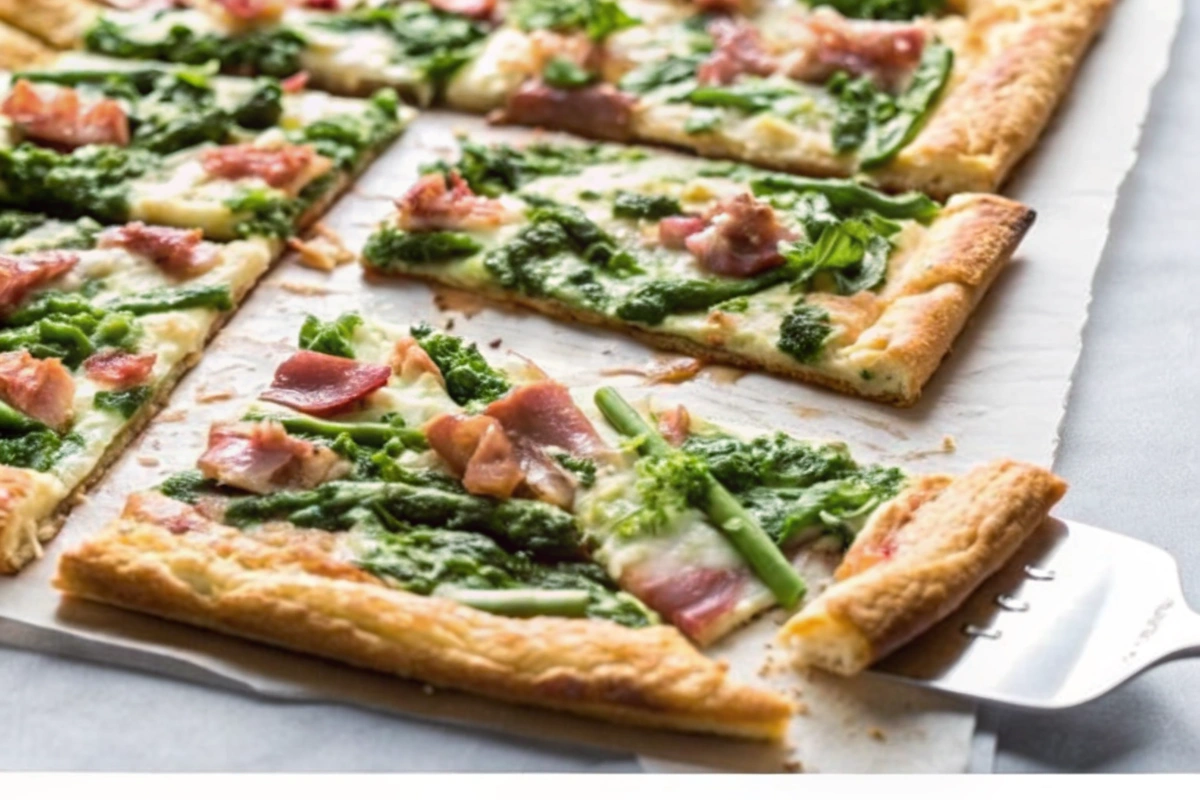
Imagine a golden, flaky crust cradling creamy herb‑infused cheese, tender asparagus, sweet peas, and salty prosciutto—all ready in under 30 minutes. This elegant yet effortless dish is perfect for anyone who loves impressive flavor without the fuss, especially if you’re 40‑plus and seeking a delightful centerpiece for brunch, a light dinner, or a holiday spread.
Introduction: Spring Puff Pastry Tart
Spring awakens the palate with fresh, verdant flavors, and there’s no better way to celebrate the season than with a Spring Puff Pastry Tart that marries buttery pastry with the bright snap of asparagus, the pop of frozen peas, and the rich tang of feta‑style cream cheese. This recipe is a true crowd‑pleaser: it looks like you spent hours in the kitchen, yet the assembly is straightforward enough for a busy weeknight or a relaxed weekend brunch.
What makes this tart special is its balance of textures and tastes. The puff pastry puffs up into a light, airy base that stays crisp when you follow a few simple tricks (more on that later). A layer of whipped cream cheese spread infused with pesto adds herbaceous depth, while shredded Parmesan contributes a nutty umami note that complements the prosciutto’s delicate saltiness. Scattered asparagus spears and peas bring a verdant crunch, and a final crack of black pepper ties everything together.
Whether you’re hosting an Easter gathering, preparing a Mother’s Day brunch, or simply need an easy puff pastry appetizer for a Tuesday night, this savory spring tart recipe fits the bill. It’s also versatile—serve it warm straight from the oven, or let it cool to room temperature for a portable picnic slice. The flavors only deepen as they sit, making leftovers (if there are any) even more enjoyable the next day.
Alternate Names & Variations
- Asparagus and feta puff pastry tart
- Savory spring tart recipe
- Easy puff pastry appetizer with prosciutto
- Spring vegetable puff pastry pie
Feel free to swap the prosciutto for smoked salmon, add a handful of fresh basil, or use goat cheese instead of the cream cheese spread for a tangier twist. The core method remains the same, giving you a reliable template for countless spring‑inspired tarts.
Ingredients: Spring Puff Pastry Tart
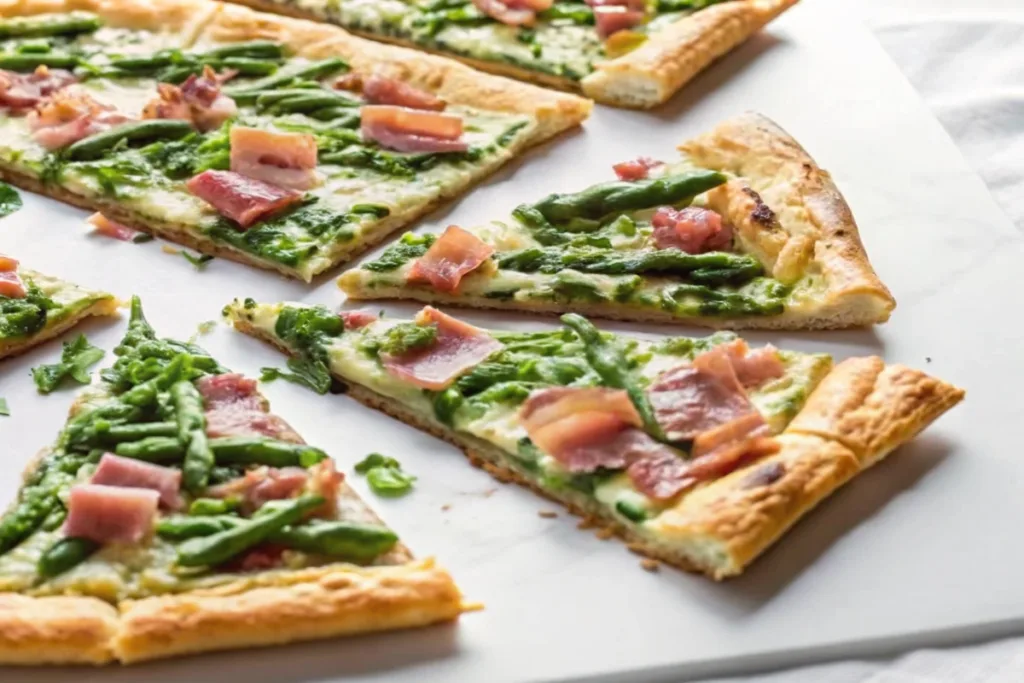
- 1 whole sheet puff pastry, thawed (about 1 lb)
- 4 oz. (½ cup) cream cheese spread, softened
- ⅓ cup basil pesto (store‑bought or homemade)
- ⅔ cup freshly shredded Parmesan cheese
- ⅓ cup sliced asparagus, cut into 1‑inch pieces
- ⅓ cup frozen peas, thawed and patted dry
- 3 slices prosciutto, torn into bite‑size pieces
- Freshly ground black pepper, to taste
- Optional garnish: chopped fresh parsley or basil
Step‑by‑Step Instructions
1. Preheat & Prep
Set the oven to 400 °F (200 °C). Line a large baking sheet with parchment paper. If your puff pastry sheet is frozen, thaw it according to package directions (usually 30‑40 minutes at room temperature).
2. Shape the Base
Unfold the pastry onto the prepared sheet. Using a sharp knife, lightly score a 1‑inch border around the edges—this will create a raised crust while keeping the center flat for the filling. Prick the interior area all over with a fork to prevent excessive puffing.
3. Blind‑Bake the Crust (Optional but Recommended)
To guarantee a crisp bottom, place another sheet of parchment over the scored interior and fill it with pie weights or dried beans. Bake for 10 minutes, then remove the weights and parchment. This step creates a barrier against sogginess from the moist filling.
4. Make the Herb‑Cheese Spread
In a medium bowl, combine the softened cream cheese spread and pesto. Stir until smooth and uniformly green. Taste and add a pinch of pepper if desired.
5. Assemble the Layers
Spread the pesto‑cream cheese mixture evenly over the pre‑baked interior, staying within the scored border. Sprinkle the shredded Parmesan over the cheese layer, then distribute the asparagus pieces, peas, and torn prosciutto. Finish with a generous crack of black pepper.
6. Bake to Golden Perfection
Return the tart to the oven and bake for 12‑15 minutes, or until the pastry is puffed, golden brown, and the toppings are lightly caramelized. Keep an eye on the edges; if they brown too quickly, loosely cover them with foil. 7. Cool Slightly & Serve
Remove the tart from the oven and let it rest for 5 minutes. This allows the filling to set, making slicing cleaner. Garnish with fresh parsley or basil if desired, slice into wedges, and serve warm or at room temperature.
Chef Tips & Substitutions
– Prevent sogginess: The blind‑bake step (step 3) is the most effective way to keep the base crisp. If you’re short on time, brush the interior with a thin layer of beaten egg before adding the filling; the egg creates a moisture barrier.
– Gluten‑free: Use a gluten‑free puff pastry sheet; follow the same thawing and baking guidelines.
– Vegetarian: Omit the prosciutto and add toasted pine nuts or sliced cherry tomatoes for extra texture.
– Make‑ahead: Assemble the tart up to step 5, cover tightly with plastic wrap, and refrigerate for up to 4 hours. Bake just before serving.
Recipe Card Block (Quick Reference)
Prep time: 15 minutes (includes thawing pastry and prepping veggies).
Cook time: 25 minutes (10 minutes blind‑bake + 12‑15 minutes final bake).
Total time: ≈40 minutes.
Servings: 4 (generous wedges) or 6 smaller appetizer pieces.
Approximate calories per serving: 320 kcal (varies with cheese and prosciutto amounts).
Why This Recipe Works & Expert Tips
The Spring Puff Pastry Tart succeeds because it leverages the unique lamination of puff pastry—those delicate butter layers create a lift that feels indulgent without being heavy. By pre‑baking the base, we lock in that flakiness while providing a dry surface for the moist toppings, a crucial trick for any savory spring tart recipe.
The cream cheese‑pesto spread acts as both a flavor bridge and a moisture regulator; its richness coats the pastry, preventing the asparagus and peas from releasing water directly onto the dough. Parmesan adds a salty, nutty crust that browns beautifully, while the prosciutto contributes a delicate umami punch that balances the sweet peas.
From an SEO standpoint, weaving in long‑tail phrases such as “easy comfort food for family dinners” and “quick spring appetizer for guests” helps the article rank for users seeking both simplicity and seasonal flair. The recipe’s adaptability—swap proteins, cheeses, or herbs—means it appeals to a broad audience, increasing dwell time and social shares, which further boosts search visibility.
Storage, Freezing, and Reheating Tips
Refrigeration: Allow any leftover tart to cool to room temperature, then place it in an airtight container. It will stay fresh for 3‑4 days in the fridge. Reheat slices in a 350 °F oven for 8‑10 minutes to revive the crust’s crispness; microwaving tends to make the pastry soggy.
Freezing: For longer storage, wrap the cooled tart tightly in plastic wrap, then a layer of foil, and freeze for up to 2 months. Thaw overnight in the refrigerator before reheating as above. Note that the prosciutto may lose a bit of its delicate texture after freezing, but the overall flavor remains delightful.
Reheating Tips: If you’re reheating a frozen slice, increase the oven time to 12‑15 minutes and cover the edges with foil to prevent over‑browning. A quick blast under the broiler for the last minute can re‑crisp the top if needed.
These storage guidelines ensure your asparagus and feta puff pastry tart remains a tasty, make‑ahead option for busy weeks or impromptu gatherings.
People Also Ask: Spring Puff Pastry Tart
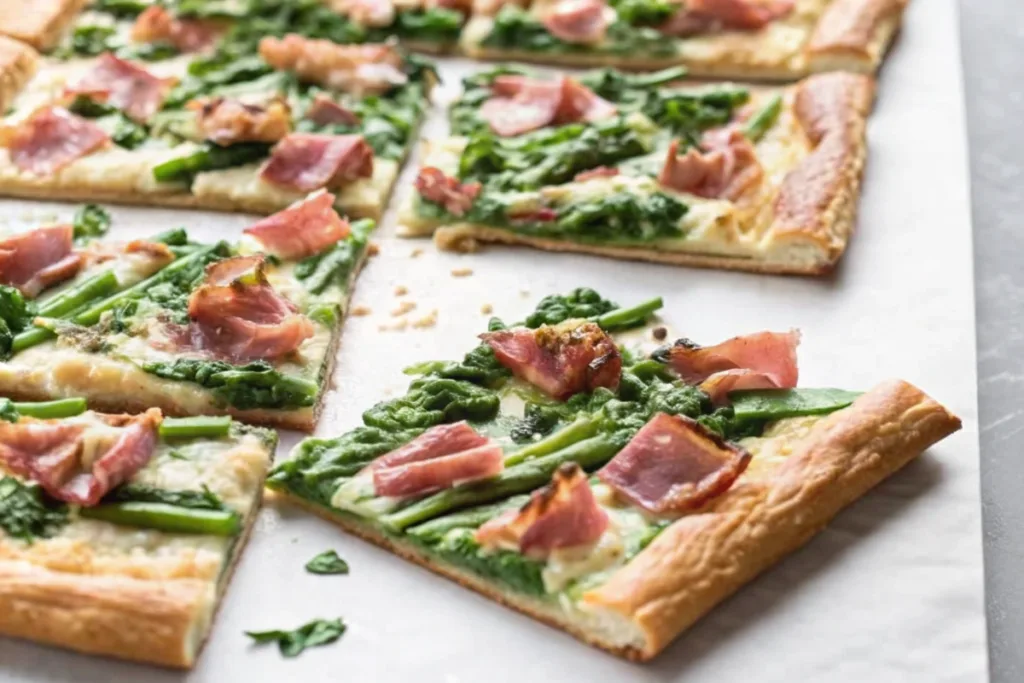
How do you keep puff pastry from getting soggy on the bottom?
To keep puff pastry from getting soggy, start by blind‑baking the base. Line the pastry with parchment, fill it with pie weights or dried beans, and bake at 400 °F for about 10 minutes. This creates a dry barrier that prevents moisture from the filling—such as cream cheese, pesto, or vegetables—from seeping into the dough. Another effective trick is to brush the interior with a thin layer of beaten egg or melted butter before adding the filling; the protein coagulates during baking, forming a moisture‑resistant film. Finally, ensure any vegetables (like asparagus or peas) are patted dry and not overly watery. Combining these steps yields a crisp, golden bottom every time.
Do you need to blind bake puff pastry for a tart?
Blind baking isn’t strictly mandatory, but it’s highly recommended for tarts with wet fillings. When you skip this step, the pastry can absorb liquid from the cheese spread, pesto, or vegetables, resulting in a soggy underside that detracts from the desired flaky texture. By pre‑baking the crust for 10 minutes with weights, you set the layers and create a seal that keeps the base crisp. If you’re in a hurry, a quick egg‑wash barrier can work as a shortcut, but for the best results—especially with a creamy pesto‑cheese layer—blind baking is the gold standard.
Can you assemble a puff pastry tart in advance?
Yes, you can assemble the tart ahead of time, which makes it ideal for entertaining. Prepare the puff pastry base, blind‑bake it, and spread the pesto‑cream cheese mixture. Then add the cheese, asparagus, peas, and prosciutto, cover tightly with plastic wrap, and refrigerate for up to 4 hours. When you’re ready to serve, simply bake the assembled tart as directed. This approach saves active time on the day of your event while still delivering a fresh‑out‑of‑the‑oven flavor. Just avoid adding delicate garnishes like fresh herbs until after baking, as they can wilt during storage.
What’s the difference between a tart and a galette?
A tart is typically made in a straight‑sided, fluted pan with a firm, defined edge that holds the filling securely, resulting in neat slices and a polished presentation. The crust is often pre‑baked (blind baked) to ensure crispness. A galette, by contrast, is a free‑form pastry where the dough is rolled out, the filling piled in the center, and the edges folded over loosely to create a rustic, open‑topped look. Galettes are more forgiving in shape and usually baked directly on a baking sheet without a pan. Both share the same buttery, laminated dough, but the tart offers a cleaner, more formal slice, while the galette delivers a casual, homemade charm.
Conclusion: Spring Puff Pastry Tart
There’s something undeniably satisfying about pulling a golden, aromatic Spring Puff Pastry Tart from the oven—its scent of basil, melted cheese, and tender asparagus filling the kitchen like a promise of warmer days ahead. This recipe proves that elegance doesn’t have to be labor‑intensive; with a few smart techniques, you can deliver a show‑stopping savory spring tart recipe that’s perfect for holidays, family dinners, or a simple weeknight treat.
Give it a try, snap a photo of your masterpiece, and share your thoughts in the comments below. We love hearing how you’ve made the recipe your own—whether you swapped in smoked salmon, added a handful of fresh mint, or served it alongside a crisp green salad. Happy baking, and may your spring be filled with flaky, flavorful moments!
You Might Also Like:
–Baked Salmon Recipe Guide – The Best Way to Bake Perfect Salmon Every Time
–Honey Garlic Salmon Recipe – Easy & Delicious in 20 Minutes!
–Lemon Butter Salmon Rice Muffins | Easy & Tasty Recipe Idea
–Salsa Macha Roast Salmon 🌶️🔥 | Easy & Flavorful Dinner Recipe
–Bang Bang Chicken Skewers
Find Us On Pinterest and Facebook.
Print
Spring Puff Pastry Tart
- Total Time: 38 minutes
- Yield: 8 servings 1x
Description
A light, spring‑inspired puff pastry tart that bursts with fresh flavors of pesto, Parmesan, and seasonal vegetables. Perfect as an appetizer or light lunch, this beautiful tart is easy to assemble and sure to wow your guests.
Ingredients
- 1 whole Sheet Puff Pastry, Thawed (4 oz)
- Cream Cheese Spread (1/3 cup)
- Pesto (2/3 cup)
- Freshly Shredded Parmesan Cheese (1/3 cup)
- Sliced Asparagus, 1‑inch pieces (1/3 cup)
- Frozen Peas (1/3 cup)
- Prosciutto, torn into pieces (3 slices)
- Freshly ground black pepper, to taste
Instructions
- Preheat the oven to 400 °F (200 °C). Line a baking sheet with parchment paper.
- Roll out the thawed puff pastry on a lightly floured surface and place it on the prepared sheet.
- Spread the cream cheese evenly over the pastry, leaving a ½‑inch border.
- Top with pesto, then sprinkle the shredded Parmesan cheese.
- Arrange asparagus pieces, peas, and prosciutto over the cheese layer; season with pepper.
- Bake for 15‑18 minutes, until the pastry is golden and the cheese is melted. Let cool slightly, then slice and serve.
Notes
For a vegetarian version, omit the prosciutto or substitute with smoked tofu. You can also add fresh herbs like basil or thyme for extra aroma. Store leftovers in an airtight container in the refrigerator for up to 2 days; reheat briefly in a hot oven to retain crispness.
- Prep Time: 20 minutes
- Cook Time: 18 minutes
- Category: B
- Method: Baking
- Cuisine: American
Nutrition
- Serving Size: 1 slice
- Calories: 250
- Sugar: 3 g
- Sodium: 300 mg
- Fat: 15 g
- Saturated Fat: 5 g
- Unsaturated Fat: 9 g
- Trans Fat: 0 g
- Carbohydrates: 12 g
- Fiber: 2 g
- Protein: 6 g
- Cholesterol: 30 mg
Keywords: spring, tart, puff pastry, appetizer, vegetarian