
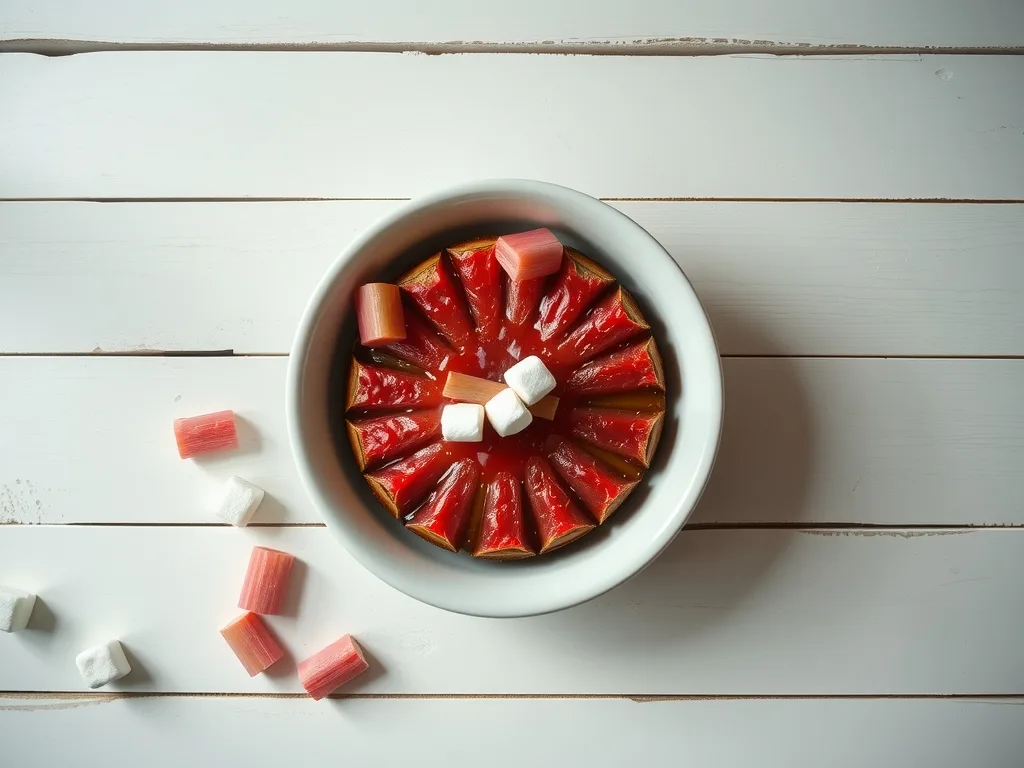
Upside-Down Rhubarb Cake: A Sweet Spring Treat
Welcome to the delightful world of upside‑down cakes, where tart rhubarb meets buttery caramel in a show‑stopping dessert that’s perfect for brunches, afternoon teas, or a cozy family gathering. This recipe takes the classic concept and elevates it with a hint of strawberry gelatin, a touch of tapioca for just‑right thickness, and optional mini marshmallows that melt into sweet pockets of surprise. Whether you’re a seasoned baker or looking to impress guests with a pretty‑as‑a‑picture cake, you’ll find clear steps, helpful tips, and all the SEO‑rich details you need to make this upside‑down rhubarb cake a repeat favorite.
The magic begins with a simple caramel base that crisps the edges of the pan, then a layer of fresh (or thawed frozen) rhubarb that softens into a jewel‑toned topping as the cake bakes. When you invert the warm cake, the glossy fruit cascades over a tender, moist crumb infused with vanilla and a whisper of citrus from the cake mix. Serve it warm with a scoop of vanilla ice cream or a dollop of whipped cream, and watch the smiles multiply. Let’s dive into the details that make this recipe both reliable and unforgettable.
Alternate Names & Variations
Upside‑down rhubarb cake is also known as caramel rhubarb upside‑down cake, rhubarb skillet cake, or spring rhubarb tart‑in‑a‑pan. Some bakers swap the white cake mix for a yellow or spice cake mix to add depth, while others replace the strawberry gelatin with raspberry or lemon‑lime for a different fruity note. For a gluten‑free version, use a certified gluten‑free cake blend and ensure the tapioca or cornstarch is also gluten‑free. If you love nuts, toss a handful of chopped pecans or almonds into the caramel layer for added crunch. Feel free to experiment—this recipe is a welcoming canvas for your seasonal twists.
Ingredients
*Note: The script will place an image immediately after this section.*
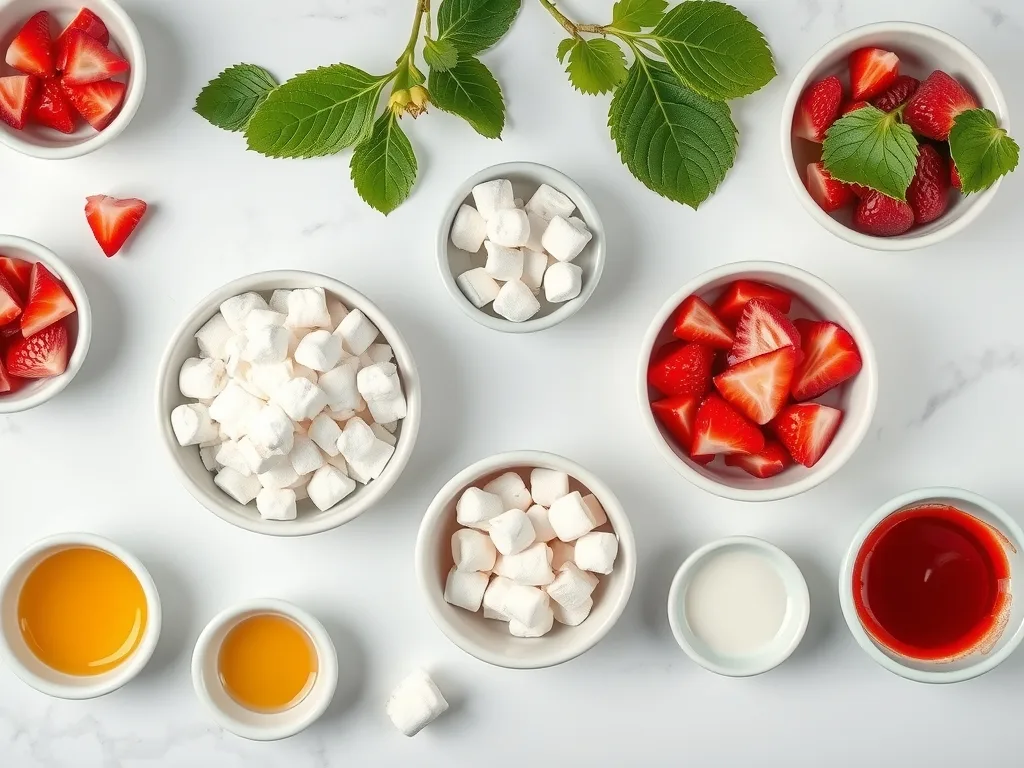
– 4 cups chopped rhubarb (about 1 lb), fresh or frozen‑thawed and well‑drained
– ½ cup granulated white sugar (for the caramel)
– 1 (3‑ounce) package strawberry‑flavored gelatin (such as Jell‑O)
– 3 tablespoons quick‑cooking tapioca *or* 2 Tbsp cornstarch (to thicken the juices)
– 1 cup mini marshmallows (optional, for extra gooey sweetness)
– 1 (15.25‑ounce) package white cake mix (such as Duncan Hines)
– 1 cup water
– 3 large eggs (use egg whites only if following the Duncan Hines low‑fat directive)
– ⅓ cup vegetable oil (you can increase to ½ cup per the cake‑mix box directions for a richer crumb)
*Optional garnish*: powdered sugar, fresh mint leaves, or a drizzle of extra caramel sauce.
Step‑by‑Step Instructions
1. Prep the pan – Preheat your oven to 350 °F (175 °C). Generously grease a 9‑inch round cake pan with butter or non‑stick spray, then sprinkle the ½ cup sugar evenly over the bottom. This will melt into a golden caramel as the cake bakes.
2. Layer the rhubarb – Spread the chopped rhubarb over the sugar in an even layer. If using frozen rhubarb, make sure it’s thawed and patted dry to avoid excess moisture. Scatter the mini marshmallows (if using) across the fruit.
3. Prepare the thickener – In a small bowl, whisk together the strawberry gelatin, quick‑cooking tapioca (or cornstarch), and 2 Tbsp of the water from the cake‑mix ingredients. This mixture will help the rhubarb juices set into a glossy sauce without making the cake soggy. Pour it over the rhubarb and gently toss to coat.
4. Make the cake batter – In a large mixing bowl, combine the white cake mix, remaining water, eggs (or egg whites), and vegetable oil. Beat on medium speed for 2 minutes until smooth and slightly thickened. The batter should be pourable but not runny.
5. Pour the batter – Carefully pour the cake batter over the rhubarb layer, spreading it gently with a spatula to cover the fruit completely. Avoid stirring; you want distinct layers.
6. Bake – Place the pan on the middle rack and bake for 35‑40 minutes, or until a toothpick inserted into the center of the cake (not the fruit) comes out clean or with just a few moist crumbs. The edges will pull away slightly from the pan, and the top will be golden brown.
7. Cool slightly – Remove the cake from the oven and let it rest on a wire rack for 10 minutes. This brief cooling period allows the caramel to firm up just enough to hold its shape when flipped, yet still stay fluid enough to release cleanly.
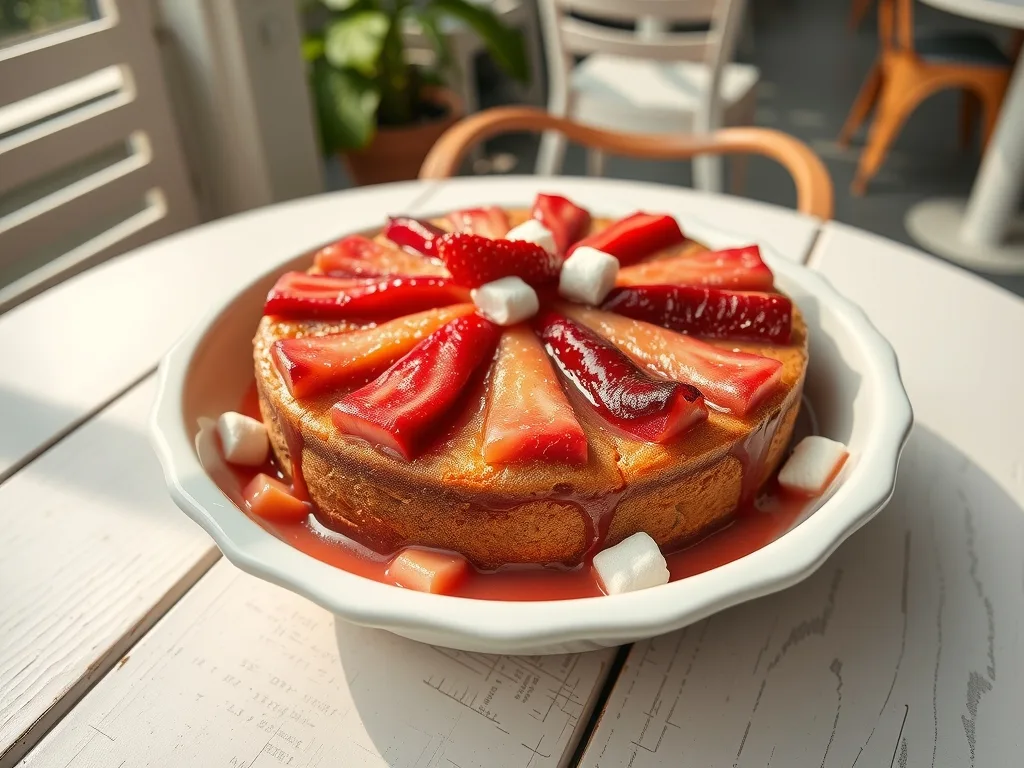
8. Invert and serve – Place a large serving plate over the pan. Using oven mitts, confidently flip the pan and plate together in one swift motion. Lift the pan away to reveal the beautiful rhubarb‑caramel topping. If any fruit sticks, gently nudge it loose with a silicone spatula. Serve warm, optionally dusted with powdered sugar or accompanied by vanilla ice cream.
Chef’s Tip: For an extra‑glossy finish, brush the warm cake with a tablespoon of melted apricot jam right after inverting. It adds shine and a subtle complementary flavor.
Recipe Card Reference
Prep Time: 15 minutes
Cook Time: 35‑40 minutes
Total Time: ≈55 minutes
Servings: 10‑12 generous slices
Calories per serving: approximately 280 kcal (based on a 1‑slice portion using the listed ingredients; values vary with optional marshmallows and ice‑cream accompaniment).
Why This Recipe Works & Expert Tips
The success of this upside‑down rhubarb cake hinges on three key factors: moisture balance, flavor layering, and structural integrity. First, the combination of quick‑cooking tapioca (or cornstarch) with strawberry gelatin creates a gentle gel that captures the rhubarb’s natural juices, preventing a soggy bottom while still delivering a luscious sauce. Second, the strawberry gelatin introduces a bright, fruity note that pairs beautifully with rhubarb’s tartness, elevating the flavor profile beyond a plain caramel‑fruit cake. Third, using a trusted white cake mix guarantees a tender crumb with consistent rise, reducing the guesswork often associated with scratch batters.
Expert tip #1: If you prefer a less sweet cake, reduce the sugar in the caramel layer to ¼ cup and increase the rhubarb slightly; the fruit’s natural tartness will shine through.
Expert tip #2: For a deeper caramel flavor, melt the sugar with a tablespoon of butter and a splash of water before pouring it into the pan; this creates a richer, more complex base.
Expert tip #3: To avoid a stuck cake, run a thin knife around the edge of the pan immediately after the 10‑minute cool‑down, then invert. The slight loosening ensures a clean release without damaging the delicate fruit layer.
These adjustments let you tailor the cake to your taste while preserving the foolproof nature of the original method.
Storage, Freezing, and Reheating
Allow the cake to cool completely before storing. Cover it tightly with plastic wrap or transfer slices to an airtight container; it will stay fresh at room temperature for up to 2 days or in the refrigerator for 4‑5 days. For longer storage, wrap individual slices in foil and place them in a freezer‑safe bag; they freeze well for up to 2 months. Thaw overnight in the fridge, then warm slices in a 300 °F oven for 10‑12 minutes or microwave for 20‑30 seconds until just heated through. Avoid reheating the whole cake multiple times, as repeated heating can dry the crumb; instead, reheat only the portion you plan to serve.
People Also Ask
How do you flip an upside-down cake without it falling apart?
Flipping an upside‑down cake successfully relies on timing and a confident motion. After baking, let the cake rest in the pan for exactly 10 minutes; this allows the caramel to set just enough to hold its shape while still being fluid. Place a large, flat serving plate securely over the pan, holding both together with oven mitts. In one swift, decisive motion, flip the pan and plate upside down. Lift the pan away gently; the cake should release cleanly. If any fruit sticks, use a silicone spatula to nudge it loose. Practicing this motion with a cool, empty pan first can build confidence.
Do you let an upside-down cake cool before flipping?
Yes, a brief cooling period is essential. Immediately after removing the cake from the oven, let it sit in the pan for about 10 minutes. This rest allows the caramel layer to thicken slightly, reducing the risk of it running off when inverted. If you flip the cake too soon, the hot caramel can be too liquid, causing the cake to slide or break apart. Conversely, waiting too long can cause the caramel to harden and stick to the pan, making release difficult. The 10‑minute window is the sweet spot for a clean, intact flip.
How do you keep the fruit from sticking to the pan in an upside-down cake?
Preventing fruit from sticking starts with a well‑greased pan and a proper caramel base. Generously butter or spray the pan, then sprinkle the ½ cup sugar evenly; as it melts, it forms a non‑stick, glossy layer that the rhubarb sits on. Additionally, ensure the rhubarb is dry—especially if using frozen—by patting it thawed pieces with a paper towel. Excess moisture creates steam, which can cause the fruit to adhere. Finally, after the brief 10‑minute cool‑down, run a thin knife around the edge of the pan before inverting; this loosens any potential sticking points without disturbing the cake’s structure.
Can you make an upside-down cake ahead of time?
Absolutely. You can prepare the cake up to a day in advance. Bake and cool the cake completely, then cover it tightly with plastic wrap or store it in an airtight container at room temperature. When ready to serve, simply rewarm slices briefly in a 300 °F oven for 10‑12 minutes or microwave for 20‑30 seconds to revive the caramel’s shine and the crumb’s tenderness. If you need to make it even earlier, freeze individual slices as described in the storage section; thaw and reheat before serving. This make‑ahead flexibility makes the cake ideal for entertaining or holiday prep. ## Conclusion
There’s something truly special about pulling a golden, fruit‑laden cake from the oven and watching the vibrant rhubarb cascade over a buttery crumb as you flip it onto a serving plate. This upside‑down rhubarb cake balances tart sweetness, moist texture, and a hint of strawberry sparkle, making it a show‑stopper that feels both nostalgic and fresh. We hope you enjoy baking it as much as we love sharing it. If you try the recipe, snap a photo, tag us, and let us know how it turned out—your feedback fuels our kitchen adventures!
You Might Also Like
– Best Rhubarb Cake Recipe – A moist, tender loaf that highlights spring’s tart stalks.
– Caramel Rhubarb Upside-Down Cake – A deeper caramel twist with bourbon‑infused sauce.
– Strawberry Rhubarb Crisp – A crunchy oat topping paired with juicy fruit for a quick dessert.
– Easy Lemon Yogurt Cake – Light, citrusy perfection for afternoon tea.
– Classic Pineapple Upside-Down Cake – The timeless tropical favorite with maraschino cherries.
– Gluten-Free Vanilla Cake Mix Desserts – Adaptable mixes for those avoiding gluten.