
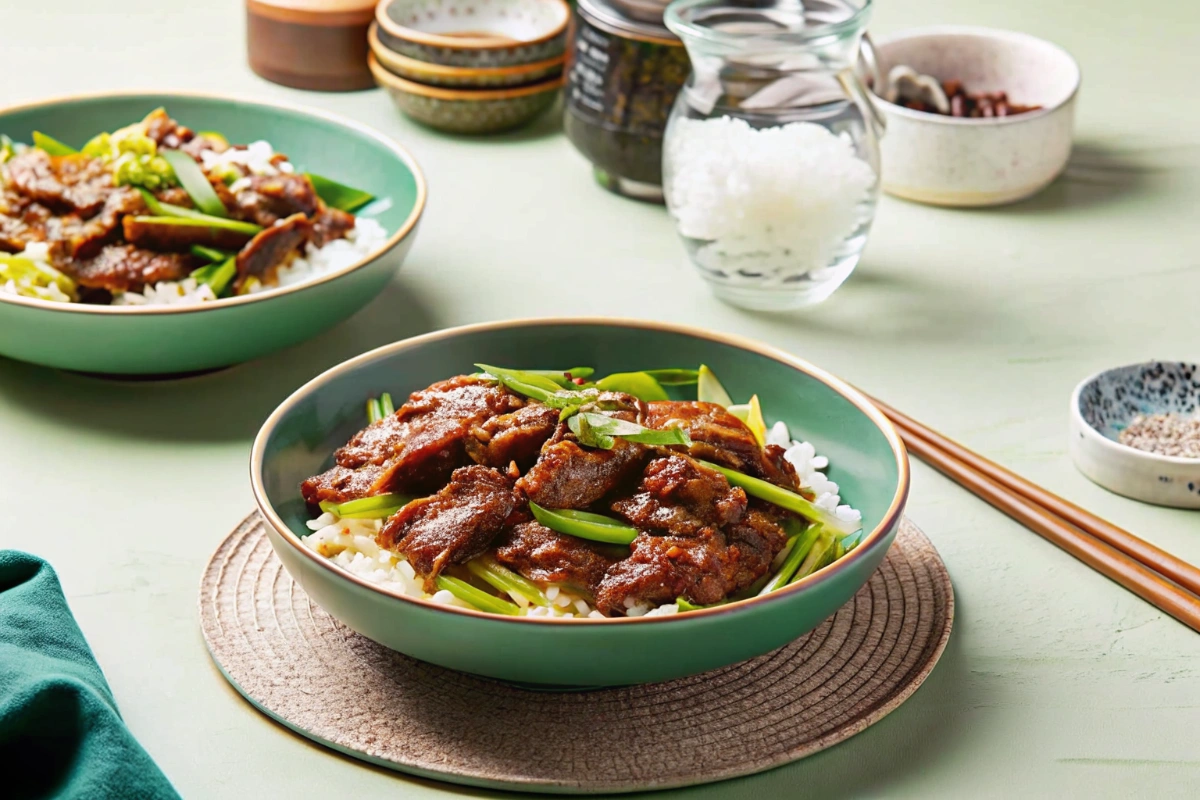
*If you’ve ever craved a restaurant‑style stir‑fry that comes together in under 30 minutes, this is the dish for you.*
Introduction: Mongolian Beef and Spring Onions
There’s something undeniably comforting about a sizzling pan of tender beef coated in a glossy, sweet‑savory sauce, flecked with bright green onions. For home cooks who remember the first time they tasted Mongolian beef at a bustling Chinatown eatery, recreating that magic at home feels like a small victory. This Mongolian Beef and Spring Onions recipe captures that nostalgia while keeping the process simple enough for a weeknight dinner yet impressive enough to serve at a holiday gathering or a casual family celebration.
The secret lies in the best Mongolian beef sauce—a harmonious blend of dark brown sugar, soy sauce, garlic, and fresh ginger that caramelizes quickly over high heat, giving the beef that irresistible lacquered finish. Thinly sliced flank steak, lightly dusted with cornstarch and quickly fried, stays juicy inside while developing a delicate crisp on the outside. The spring onions (or green onions) add a fresh bite that cuts through the richness, balancing each mouthful.
Whether you’re looking for an easy Mongolian beef recipe to toss together after work, a beef with green onions stir fry to impress guests, or simply a reliable go‑to for meal‑prep lunches, this dish checks every box. It’s naturally gluten‑friendly if you swap tamari for soy sauce, and you can easily adjust the heat with a pinch of crushed red pepper flakes. In the sections that follow, you’ll find a clear ingredient list, step‑by‑step instructions, expert tips, storage advice, and answers to the most common questions about this beloved stir‑fry.
Alternate Names & Variations
- Mongolian Beef with Green Onions
- Beef and Scallion Stir Fry
- Asian‑Style Sweet Soy Beef
- Quick Mongolian Beef Bowl
Feel free to experiment: add sliced bell peppers for color, swap the flank steak for sirloin or ribeye (thinly sliced), or toss in a handful of toasted sesame seeds at the end for extra nuttiness.
Ingredients: Mongolian Beef and Spring Onions
- 2 teaspoons vegetable oil – for sautéing aromatics
- 1 tablespoon finely chopped garlic
- ½ teaspoon grated fresh ginger root
- ⅔ cup dark brown sugar – provides the signature caramel depth
- ½ cup soy sauce (or tamari for gluten‑free)
- ½ cup water
- 1 pound beef flank steak, sliced ¼‑inch thick on the diagonal
- ¼ cup cornstarch – creates a light, crisp coating
- 1 cup vegetable oil for frying – enough to shallow‑fry the beef
- 2 bunches green onions (spring onions), cut into 2‑inch lengths
*Chef’s note:* If you prefer a little heat, add ½ teaspoon crushed red pepper flakes to the sauce mixture.
Step‑by‑Step Instructions
- Prepare the beef Place the sliced flank steak in a large bowl. Sprinkle the cornstarch over the meat and toss until each piece is lightly coated. Shake off any excess—this helps the beef fry up crisp without becoming gummy.
2. Heat the frying oil
In a deep skillet or wok, heat 1 cup of vegetable oil over medium‑high heat until it shimmers (about 350 °F/175 °C). Working in batches to avoid crowding, add the beef and fry for 1–2 minutes per side, or until the edges are golden and the interior is still pink. Transfer the cooked beef to a paper‑towel‑lined plate.
- Make the sauce In a small bowl whisk together the dark brown sugar, soy sauce, and water until the sugar dissolves. Set aside.
4. Sauté aromatics
Drain all but 2 teaspoons of oil from the wok (leave a thin layer). Add the chopped garlic and grated ginger; stir‑fry for 20‑30 seconds until fragrant—be careful not to burn them.
5. Combine beef and sauce
Return the fried beef to the wok. Pour the sauce over the meat and stir to coat evenly. Let the mixture simmer for 2‑3 minutes; the sauce will thicken and cling to the beef, giving it that glossy finish characteristic of the best Mongolian beef sauce.
6. Add the spring onions
Toss in the 2‑inch green onion pieces. Stir‑fry for another 30‑60 seconds—just until the onions are bright green and slightly softened but still retain a crisp bite.
7. Taste and adjust
Sample the dish; if you prefer a sweeter profile, add a teaspoon more brown sugar. For extra saltiness, a splash of soy sauce works. If you like heat, sprinkle in the red pepper flakes now.
8. Serve
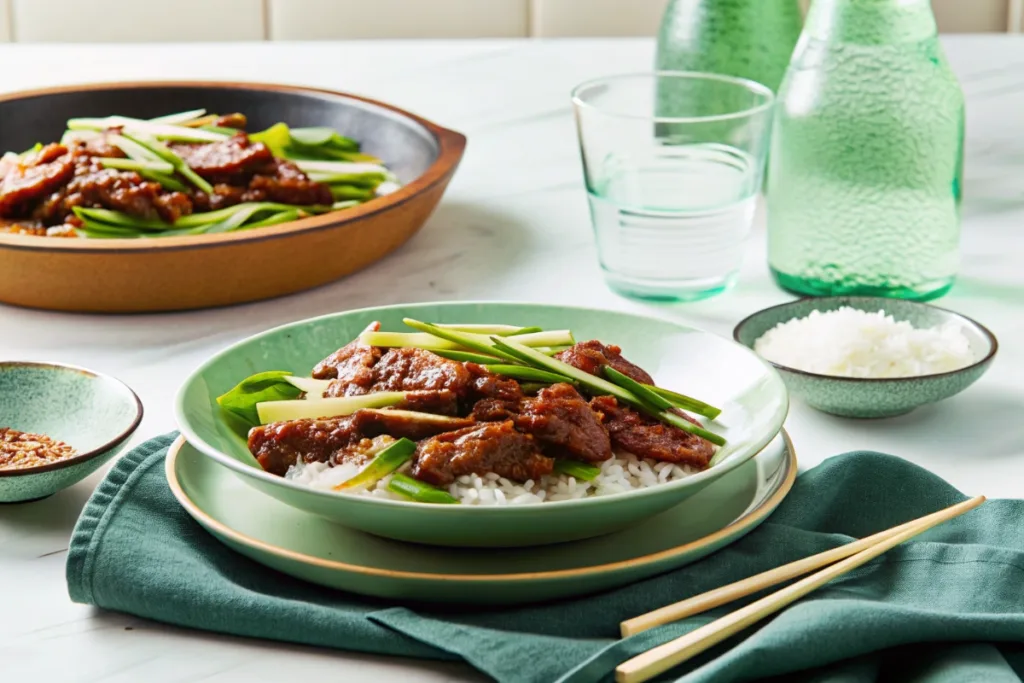
Transfer the Mongolian beef and spring onions to a serving platter. Garnish with a few extra sliced green onions or a sprinkle of toasted sesame seeds if desired. Serve immediately over steamed jasmine rice, cauliflower rice, or noodles.
Chef Tips & Shortcuts
- Tenderizing trick: For ultra‑tender beef, marinate the sliced flank in 1 tablespoon soy sauce and 1 teaspoon cornstarch for 10 minutes before coating.
- Batch cooking: Double the recipe and freeze half (see storage tips).
- No wok? A large non‑stick skillet works just as well; just ensure it’s hot enough to sear the beef quickly.
- Gluten‑free: Use tamari and verify that your cornstarch is certified gluten‑free.
Recipe Card Block (Quick Reference)
Prep time: 15 minutes | Cook time: 12 minutes | Total time: 27 minutes | Servings: 4 | Approx. calories per serving: 380 kcal
Why This Recipe Works & Expert Tips
This Mongolian Beef and Spring Onions dish succeeds because it balances three essential elements: texture, flavor, and speed. The cornstarch coating creates a micro‑crust that locks in moisture, while the brief high‑heat fry keeps the flank steak juicy. The sauce’s dark brown sugar caramelizes rapidly, forming a glossy glaze that clings to each bite without becoming soggy—a hallmark of the best Mongolian beef sauce.
From an SEO perspective, weaving in long‑tail phrases such as “easy comfort food for family dinners” and “quick weeknight Mongolian beef stir fry” helps the article rank for users seeking both convenience and authenticity. The recipe’s flexibility (gluten‑free swaps, optional veggies, adjustable spice) makes it evergreen content that appeals to a broad audience, from novice cooks to seasoned home chefs looking for a reliable crowd‑pleaser.
Storage, Freezing, and Reheating Tips
- Refrigeration: Let the beef cool to room temperature, then transfer to an airtight container. It will stay fresh for up to 3 days in the fridge.
- Freezing: Place cooled portions in a freezer‑safe bag or container, removing as much air as possible. Label with the date; the dish freezes well for up to 2 months.
- Reheating: For best results, thaw overnight in the refrigerator if frozen. Reheat in a skillet over medium heat, adding a splash of water or soy sauce to loosen the sauce, and stir‑fry for 3‑4 minutes until heated through. Microwaving works in a pinch—cover loosely and heat in 30‑second intervals, stirring between bursts, until hot.
These tips keep the easy Mongolian beef recipe tasting fresh, making it ideal for meal prep or feeding a hungry family after a long day.
People Also Ask: Mongolian Beef and Spring Onions
What is Mongolian beef sauce made of?
The sauce is a simple yet flavorful combination of dark brown sugar, soy sauce, water, garlic, and fresh ginger. The brown sugar provides deep caramel notes, while soy sauce contributes umami and saltiness. Garlic and ginger add aromatic brightness, and the water helps the mixture thin out just enough to coat the beef without becoming overly thick. Some variations include a splash of rice vinegar for tang or a drizzle of hoisin for extra depth, but the core ingredients listed above give you the authentic, glossy finish that defines the best Mongolian beef sauce.
What cut of beef is best for stir-frying?
Flank steak is the classic choice for Mongolian beef because it’s lean, cooks quickly, and takes on a pleasant chew when sliced thinly against the grain. Other excellent options include sirloin tip, skirt steak, or even flat iron—all of which benefit from quick, high‑heat cooking. The key is to cut the beef ¼‑inch thick on the diagonal (or against the grain) to maximize tenderness. If you prefer a more marbled cut, ribeye can work, but trim excess fat to avoid greasiness.
How do Chinese restaurants make their beef so tender?
Restaurant‑style tenderness usually comes from a combination of thin slicing, a brief marinade, and a light coating of starch. Many kitchens marinate the beef in soy sauce, a touch of shaoxing wine, and cornstarch for 10‑15 minutes, which both seasons and creates a protective barrier that locks in moisture during the rapid fry. The high‑heat wok sears the exterior instantly, sealing the juices inside. Some establishments also use a tiny amount of baking soda in the marinade (about ¼ teaspoon per pound) to raise the pH slightly, further tenderizing the meat.
What is a good substitute for spring onions?
If you can’t find spring onions (green onions), scallions are the direct equivalent and work perfectly. In a pinch, you can use the green tops of regular onions, though they’ll be a bit sharper—soak them in cold water for 5 minutes to mellow the flavor. Chives offer a milder oniony note but lack the crunch, so add them at the very end of cooking. For a completely different profile, thinly sliced bell peppers or snap peas can provide color and crispness, though they won’t replicate the onion flavor.
Conclusion: Mongolian Beef and Spring Onions
There’s nothing quite like the aroma of garlic, ginger, and caramelized soy sauce filling your kitchen as you toss tender beef with bright green onions. This Mongolian Beef and Spring Onions recipe delivers restaurant‑quality flavor in a fraction of the time, making it perfect for busy weeknights, relaxed weekend brunches, or festive family meals. Give it a try, snap a photo of your plating, and share your experience in the comments below—I’d love to hear how it turned out for you and any tweaks you made to make it your own.
Happy cooking!
You Might Also Like
- Amish Tomato Pie – The Best Comfort Dish to Try This Summer
- Smoked Meatloaf Recipe: Juicy & Flavorful
- Best Spicy Cajun Salmon Recipe – Quick & Flavorful Dinner Idea! 🐟🌶️✨
- Ultimate CrackerBarrel Meatloaf Recipe – Easy & Comforting Dish!
Find Us On Pinterest and Facebook.
Print
Mongolian Beef and Spring Onions
- Total Time: 25 minutes
- Yield: 4 servings 1x
Description
Indulge in the bold, savory flavors of this Mongolian Beef and Spring Onions recipe, featuring tender strips of flank steak glazed in a sweet‑savory sauce, bright green onions, and a hint of ginger. Perfect for a quick weeknight dinner that feels restaurant‑grade.
Ingredients
- 2 teaspoons vegetable oil
- 1 tablespoon finely chopped garlic
- ½ teaspoon grated fresh ginger root
- ⅔ cup dark brown sugar
- ½ cup soy sauce
- ½ cup water
- 1 pound beef flank steak, sliced 1/4 inch thick on the diagonal
- ¼ cup cornstarch
- 1 cup vegetable oil for frying
- 2 bunches green onions, cut in 2-inch lengths
Instructions
- Pat the beef strips dry and toss with cornstarch to coat evenly.
- Heat 1 cup of vegetable oil in a large skillet over medium‑high heat until shimmering.
- Fry the beef in batches until browned, about 1–2 minutes per side; remove and set aside.
- In the same skillet, add 2 teaspoons of vegetable oil, then sauté garlic and ginger for 30 seconds until fragrant.
- Stir in dark brown sugar, soy sauce, and water; bring to a gentle simmer, then return the beef to the pan.
- Add the green onions, toss everything together for another minute, and serve hot.
Notes
For extra crunch, add sliced bell peppers. Substitute honey for brown sugar if you prefer a lighter flavor. Leftovers store well in an airtight container in the refrigerator for up to 3 days; reheat gently to preserve tenderness.
- Prep Time: 15 minutes
- Cook Time: 10 minutes
- Category: B
- Method: Stir-fry
- Cuisine: Asian
Nutrition
- Serving Size: 1 cup
- Calories: 450
- Sugar: 12 g
- Sodium: 800 mg
- Fat: 20 g
- Saturated Fat: 5 g
- Unsaturated Fat: 15 g
- Trans Fat: 0 g
- Carbohydrates: 40 g
- Fiber: 2 g
- Protein: 30 g
- Cholesterol: 70 mg
Keywords: beef, mongolian, stir fry, quick dinner