
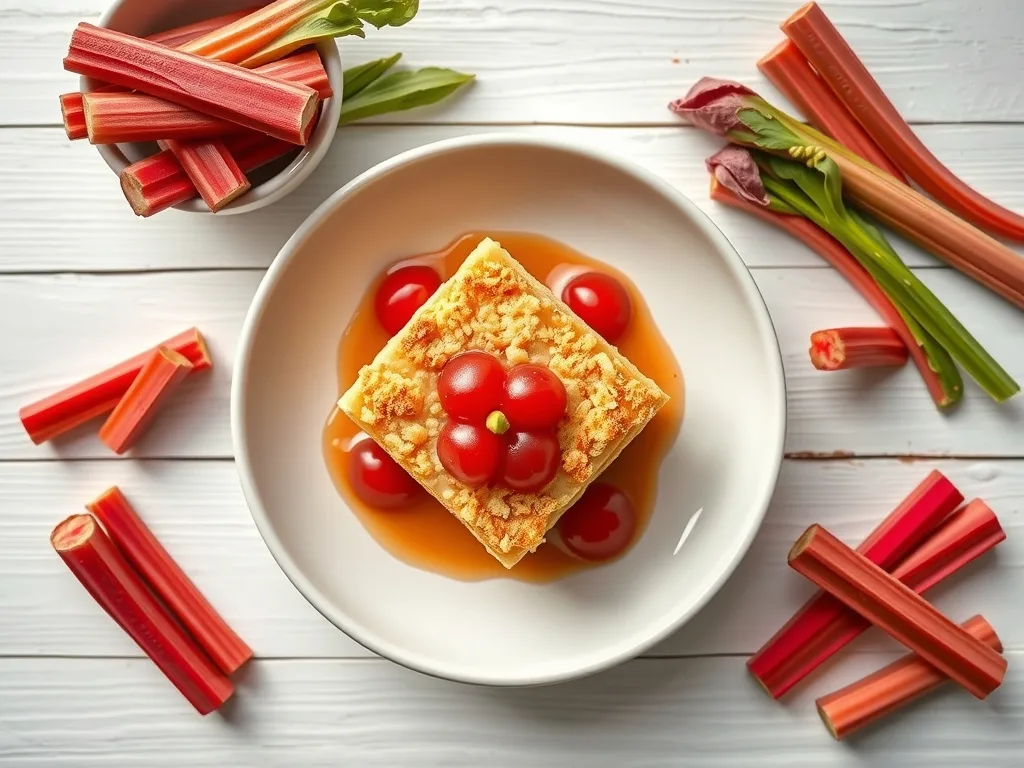
Rhubarb Sponge Pudding: A Classic Comfort Dessert for Spring
Rhubarb sponge pudding brings together the tart brightness of fresh rhubarb with a light, buttery sponge that soaks up a sweet, self‑saucing syrup as it bakes. This old‑fashioned treat is a nostalgic favorite for many who grew up enjoying steamed puddings on chilly afternoons, yet it feels just as welcoming on a bright spring day when the first stalks of rhubarb appear at the market. The contrast between the tangy fruit and the tender, golden cake creates a harmony of flavors that feels both comforting and sophisticated—perfect for serving to family, friends, or anyone who appreciates a dessert that tastes like home.
What makes this recipe especially appealing is its simplicity. With just a handful of pantry staples and a few fresh rhubarb stalks, you can create a show‑stopping pudding that requires no fancy equipment or complicated techniques. The sponge layer rises gently, enveloping the rhubarb in a moist crumb, while the sugar and butter melt into a luscious sauce that pools at the bottom of the dish. Whether you prefer to serve it warm with a dollop of clotted cream, a scoop of vanilla ice cream, or simply a dusting of powdered sugar, each bite delivers a satisfying balance of sweet‑tart richness that lingers pleasantly on the palate.
In the sections that follow, you’ll find everything you need to master this timeless dessert: a clear ingredient list, step‑by‑step instructions with chef’s tips, storage advice, and answers to common questions. Let’s dive into the delightful world of rhubarb sponge pudding and discover why it remains a beloved classic across generations.
Alternate Names & Variations
Rhubarb sponge pudding is known by several names that highlight its texture and preparation method. You may encounter it labeled as old fashioned rhubarb sponge cake, self‑saucing rhubarb pudding, or steamed rhubarb pudding. While the core concept remains the same—a sponge that bakes over a fruit base to create its own sauce—regional tweaks can add interesting nuances. Some cooks swap half of the caster sugar for brown sugar to deepen the caramel notes, while others add a pinch of ground ginger or a splash of orange zest to complement the rhubarb’s natural acidity. For a gluten‑free version, simply replace the self‑raising flour with a 1:1 gluten‑free blend and add an extra teaspoon of baking powder. If you prefer a lighter texture, you can whisk the egg whites separately and fold them in at the end, creating a more airy sponge. Regardless of the variation, the essential magic—fruit releasing its juices that mingle with butter and sugar to form a glossy sauce—remains unchanged.
Ingredients
*Note: The script will automatically place an image immediately after this header.*
– 600 g rhubarb (about 7–8 medium sticks), trimmed and sliced into 1‑cm pieces
– 100 g caster sugar (superfine sugar) – for the fruit layer
– 110 g caster sugar (superfine sugar) – for the sponge
– 110 g unsalted butter, softened to room temperature
– 2 large eggs, at room temperature
– 110 g self‑raising flour
– 1 tsp baking powder
– 1 tsp pure vanilla extract – Pinch of salt (optional, enhances flavor)
*Chef’s tip:* If you only have plain flour, combine 110 g plain flour with 1 ½ tsp baking powder and a pinch of salt to mimic self‑raising flour.
Step-by-Step Instructions
1. Preheat and prepare – Set your oven to 180 °C (350 °F). Grease a 20 cm (8‑inch) round baking dish or a similar‑sized oven‑safe bowl with a little butter, then lightly dust with flour or line the base with parchment paper for easy release.
2. Prepare the rhubarb – Place the sliced rhubarb in the bottom of the prepared dish. Sprinkle the 100 g caster sugar evenly over the fruit. The sugar will draw out moisture as it bakes, forming the base of the sauce.
3. Cream butter and sugar – In a large mixing bowl, beat the softened butter with the 110 g caster sugar using an electric mixer on medium speed until pale, fluffy, and about doubled in volume (approximately 3‑4 minutes). This incorporates air, giving the sponge its light texture.
4. Add eggs and vanilla – Crack the eggs into a small bowl, then add them one at a time to the butter‑sugar mixture, beating well after each addition. Stir in the vanilla extract until fully incorporated. 5. Combine dry ingredients – Sift the self‑raising flour and baking powder together over the wet mixture. Gently fold using a silicone spatula or a large metal spoon, turning the bowl as you go, until just combined. Over‑mixing can develop gluten and make the sponge dense, so stop as soon as the streaks disappear.
6. Layer the sponge – Spoon the batter over the rhubarb layer, spreading it gently to cover the fruit as evenly as possible. It’s okay if the batter doesn’t completely seal the edges; the rising sponge will expand and encase the fruit during baking.
7. Bake – Place the dish on the middle rack of the preheated oven. Bake for 35‑40 minutes, or until the sponge is golden brown and a skewer inserted into the center comes out clean (a few moist crumbs are fine). The edges may pull away slightly from the dish, indicating the pudding is set.
8. Rest and serve – Remove the pudding from the oven and let it sit for 5‑10 minutes. This allows the sauce to thicken slightly. Serve warm, optionally topped with a spoonful of clotted cream, vanilla ice cream, or a dusting of powdered sugar.
*Chef’s tips:*
– For a deeper flavor, add a ½ tsp ground ginger or the zest of half an orange to the batter.
– If you prefer a steamed pudding, place the dish in a large pot with simmering water reaching halfway up the sides, cover tightly with foil, and steam for 45‑50 minutes. – To test doneness without a skewer, gently press the center; it should spring back lightly.
Recipe Card Reference
This recipe yields approximately 6 generous servings. Preparation time is about 15 minutes, with a cooking time of 35‑40 minutes (or 45‑50 minutes if steaming), bringing the total time to roughly 55 minutes. Each serving contains roughly 280‑320 kcal, depending on the exact portion size and any optional toppings you add. The balance of butter, sugar, and flour provides a satisfying energy boost, while the rhubarb contributes dietary fiber and vitamin C.
Why This Recipe Works & Expert Tips
The success of rhubarb sponge pudding hinges on the interaction between the fruit’s natural pectin and the butter‑sugar sponge. As the pudding bakes, the rhubarb releases its juices, which combine with the sugar to create a syrup that partially caramelizes at the bottom. The sponge, leavened by self‑raising flour and baking powder, absorbs some of this liquid, staying moist while forming a tender crumb. The vanilla and butter add richness that balances the tartness, making each bite feel indulgent without being overly sweet.
Using caster sugar ensures quick dissolution, preventing graininess in both the fruit layer and the batter. Softened butter creamed with sugar traps air, which expands during baking, giving the pudding its characteristic lift. Adding baking powder alongside self‑raising flour provides an extra boost of lift, especially important if your flour has been stored for a while.
A common pitfall is over‑mixing the batter, which develops gluten and leads to a dense, rubbery texture. Folding just until the flour disappears keeps the crumb light. Additionally, letting the pudding rest after baking allows the sauce to thicken, preventing a soupy plate when served. For those watching sugar intake, you can reduce the caster sugar in the fruit layer to 75 g and increase the rhubarb slightly; the fruit’s natural tartness will still shine. If you prefer a richer sauce, swapping half of the butter for melted dark chocolate creates a decadent chocolate‑rhubarb variation that pairs beautifully with a scoop of vanilla ice cream.
Storage, Freezing, and Reheating Allow any leftover rhubarb sponge pudding to cool completely before transferring it to an airtight container. Stored in the refrigerator, it will stay fresh for 3‑4 days. To reheat, place a slice on a microwave‑safe plate and warm for 20‑30 seconds on medium power, or warm the whole dish in a 150 °C (300 °F) oven for 10‑12 minutes until heated through. The sauce may thicken upon chilling; a quick stir or a splash of warm milk will restore its pourable consistency. For longer storage, freeze the pudding (without toppings) in a freezer‑safe container or tightly wrapped in plastic wrap and foil. It will keep well for up to 2 months. Thaw overnight in the refrigerator, then reheat as described above. Note that the texture of the sponge may become slightly more compact after freezing, but the flavor remains delightful.
People Also Ask
*Note: The script will automatically place an image immediately after this header.*
What is the difference between a sponge pudding and a sponge cake?
A sponge pudding is baked (or steamed) with a fruit or sauce layer underneath, allowing the batter to rise over the liquid and create a self‑ saucing dessert where the sauce pools at the bottom as it cooks. A sponge cake, by contrast, is a standalone batter baked in a pan without an underlying liquid; its texture is uniformly light and airy throughout, and it is typically layered with frosting, jam, or cream after baking. The key distinction is the presence of a moist base that interacts with the sponge during cooking, giving puddings their characteristic saucy interior.
Do you eat sponge pudding hot or cold?
Sponge pudding is traditionally served warm, straight from the oven or steamer, because the heat keeps the sauce fluid and enhances the aroma of butter and vanilla. Warm pudding pairs beautifully with cold accompaniments like clotted cream, vanilla ice cream, or a dollop of whipped yogurt, creating a pleasing temperature contrast. While it can be eaten at room temperature, the sauce thickens considerably when cold, which may make the dessert feel denser and less saucy. For the best experience, reheat leftovers gently before serving.
How do you know when a steamed pudding is cooked?
When steaming a pudding, visual cues and touch are your best guides. The top should appear set and no longer look shiny or wet; a light golden hue may develop if the lid is removed briefly. Insert a thin skewer or toothpick into the center—if it comes out clean or with just a few moist crumbs, the pudding is done. Additionally, the pudding will often pull slightly away from the sides of the basin. If you’re uncertain, steam for an extra five minutes and test again; over‑steaming rarely harms the texture, but under‑steaming leaves a gummy center.
What is a self‑saucing pudding?
A self‑saucing pudding is a dessert where the sauce forms naturally during cooking, eliminating the need to prepare a separate topping. As the batter bakes or steams, the sugar and moisture from the fruit (or added liquid) sink to the bottom, while the lighter batter rises above it. The heat causes the sugar to dissolve and caramelize slightly, creating a glossy, sweet sauce that bathes the sponge. This technique yields a moist, flavorful pudding with a delightful contrast between the tender cake and the luscious, flowing sauce—exactly what makes rhubarb sponge pudding so comforting.
Conclusion
Rhubarb sponge pudding is more than just a dessert; it’s a slice of culinary nostalgia that brings the bright tang of spring rhubarb together with the humble comfort of a buttery sponge. Whether you’re serving it at a family gathering, enjoying a quiet afternoon with a cup of tea, or sharing it with friends who appreciate classic British puddings, this recipe delivers reliable, heart‑warming results every time. Give it a try, savor the sauce‑kissed sponge, and don’t forget to snap a photo for your social feeds—your followers will love seeing this timeless treat on their feeds. Happy baking!
You Might Also Like – Old Fashioned Rhubarb Sponge Cake – A denser, cake‑like twist on the classic pudding.
– Self‑Saucing Rhubarb Pudding with Ginger – Add a warm spice note for extra depth.
– Steamed Rhubarb Pudding in a Basin – Traditional steaming method for a silkier texture. – Rhubarb and Orange Upside‑Down Cake – Citrus brightens the tart fruit in a caramel‑topped bake.
– Gluten‑Free Rhubarb Crumble – A crunchy alternative that highlights rhubarb’s flavor.
– Vanilla Bean Custard to Pair with Rhubarb Pudding – Silky custard that complements the pudding’s sauce.